Hey there! I’m a supplier of hydrogen products, and I’m super excited to take you behind the scenes and show you how these amazing hydrogen products are made. Hydrogen Products

Understanding Hydrogen Basics
First off, let’s get a bit of the basics down. Hydrogen is the lightest and most abundant element in the universe. But here on Earth, it rarely exists in its pure form. Most of the time, it’s combined with other elements, like oxygen in water (H₂O) or carbon in hydrocarbons.
For us to make hydrogen products, we’ve got to separate hydrogen from those other elements. There are a few ways to do this, and each has its own pros and cons, depending on the resources we’ve got and the end – use of the hydrogen.
Steam Methane Reforming (SMR)
The most common method we use to produce hydrogen is steam methane reforming. It’s been around for a long time and is a cost – effective way to make hydrogen on an industrial scale.
Here’s how it works: We start by taking natural gas, which is mostly methane (CH₄). We heat the methane and steam it at a really high temperature, usually around 700 – 1100°C, in the presence of a nickel – based catalyst. This chemical reaction breaks the methane down and forms carbon monoxide (CO) and hydrogen gas (H₂). The equation for this is: CH₄ + H₂O → CO + 3H₂.
But that’s not the end. The carbon monoxide then reacts with more steam in what’s called the water – gas shift reaction. In the presence of another catalyst (usually iron or copper – based), it forms carbon dioxide (CO₂) and even more hydrogen: CO + H₂O → CO₂+ H₂.
After these reactions, we’ve got a mix of hydrogen, carbon dioxide, and a few other trace gases. We then use a process called pressure – swing adsorption (PSA) to separate the hydrogen. PSA works by passing the gas mixture through a bed of adsorbent material. The carbon dioxide and other impurities stick to the adsorbent, while the hydrogen passes through, giving us a fairly pure stream of hydrogen gas.
However, one big downside of SMR is that it produces a lot of carbon dioxide. We’re always looking for ways to capture and store this CO₂, either in underground formations or use it in other industrial processes to reduce its impact on the environment.
Electrolysis
Another important method of making hydrogen is electrolysis. This is a more environmentally friendly way, especially when the electricity used comes from renewable sources like solar, wind, or hydro.
In electrolysis, we use an electric current to split water (H₂O) into hydrogen and oxygen. Here’s the setup: We’ve got an electrolyzer, which is basically a container with two electrodes (an anode and a cathode) and an electrolyte (a substance that conducts electricity). When we apply an electric current to the electrodes, water molecules at the anode break down into oxygen gas and positively charged hydrogen ions (H⁺). These hydrogen ions then move through the electrolyte to the cathode, where they pick up electrons and form hydrogen gas. The overall reaction is: 2H₂O → 2H₂ + O₂.
There are different types of electrolyzers. The most common ones are alkaline electrolyzers and proton – exchange – membrane (PEM) electrolyzers. Alkaline electrolyzers have been around longer and use an alkaline solution, like potassium hydroxide (KOH), as the electrolyte. They’re relatively simple and cost – effective but have some limitations in terms of their ability to quickly adjust to changes in electricity supply.
On the other hand, PEM electrolyzers are more modern. They use a solid polymer membrane as the electrolyte. They can start up and shut down much faster than alkaline electrolyzers, which makes them a great fit for renewable energy sources that can be intermittent. The drawback is that they’re currently more expensive to produce and require some rare and expensive materials, like platinum as a catalyst.
Making Different Hydrogen Products
Once we’ve produced hydrogen gas, we can turn it into different products.
Hydrogen Fuel Cells
One of the coolest applications is hydrogen fuel cells. A fuel cell is like a battery that keeps producing electricity as long as it’s supplied with hydrogen and oxygen. Inside a fuel cell, hydrogen gas is fed to the anode, where a catalyst splits it into protons and electrons. The protons pass through a proton – exchange membrane to the cathode, while the electrons are forced to travel through an external circuit, creating an electric current. At the cathode, the protons, electrons, and oxygen from the air combine to form water.
We make fuel cells in a factory setting. First, we’ve got to prepare the electrodes, which are usually made of a porous material coated with a catalyst. Then we assemble the membrane – electrode – assembly (MEA), which is the heart of the fuel cell. After that, we add the bipolar plates, which distribute the hydrogen and oxygen gases and collect the electricity. Finally, we package the fuel cell into a housing and test it to make sure it’s working properly.
Fuel cells are used in a variety of applications, from powering cars and buses to providing backup power for buildings.
Hydrogen for Industrial Processes
Hydrogen is also used in a lot of industrial processes. For example, in the food industry, hydrogen is used in the hydrogenation of oils to turn liquid vegetable oils into solid fats, like in margarine production. In the chemical industry, it’s used in the production of ammonia (NH₃), which is a key ingredient in fertilizers.
When making hydrogen for these industrial uses, we need to make sure it meets certain purity standards. We use more advanced purification techniques, like membranes or cryogenic distillation, to get the hydrogen as pure as required.
Our Quality Control
As a supplier, we take quality control very seriously. At every step of the production process, we’ve got testing and monitoring procedures in place.
For example, when we’re producing hydrogen through steam methane reforming or electrolysis, we constantly check the composition of the gas to make sure the hydrogen purity is up to par. We use gas chromatographs to analyze the different components in the hydrogen stream.
When it comes to making fuel cells, we test each fuel cell for its performance, including its power output, efficiency, and durability. We also check the physical integrity of the fuel cell, looking for any leaks or defects.
Why Choose Our Hydrogen Products
So, why should you choose our hydrogen products? Well, first of all, we’ve got a lot of experience in the industry. We know how to produce high – quality hydrogen and hydrogen products in a cost – effective way.
Secondly, we’re committed to the environment. We’re constantly investing in research and development to find more sustainable ways of producing hydrogen. Whether it’s capturing and using the carbon dioxide from steam methane reforming or expanding our use of electrolysis with renewable energy, we’re doing our part to reduce our carbon footprint.
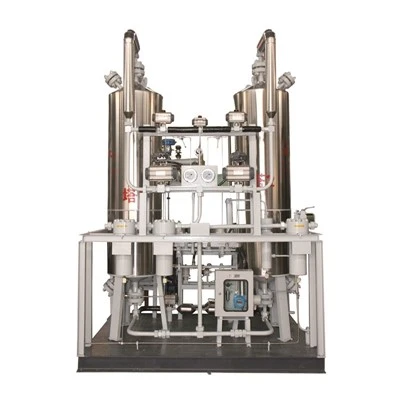
Finally, we offer excellent customer service. We work closely with our clients to understand their needs and provide them with the right hydrogen products and solutions. Whether you’re a small business looking for a batch of hydrogen fuel cells for a new project or a large industrial company in need of a steady supply of pure hydrogen, we’ve got you covered.
Let’s Connect
Marine LNG Bunkering & Fuel Gas Supply Systems If you’re interested in our hydrogen products, whether it’s hydrogen gas for industrial use, hydrogen fuel cells for your vehicles or power systems, or any other hydrogen – related product, we’d love to hear from you. Reach out to us, and we can have a chat about your requirements and how our products can meet your needs. Let’s work together to embrace the clean energy future that hydrogen holds!
References
- "Hydrogen Production: Current Technology and Future Developments." International Energy Agency.
- "Fuel Cell Systems Explained." Author: John Varcoe and others.
Chengdu Hi-tech Panda Energy Technology Co., Ltd.
With abundant experience, we are one of the most professional hydrogen products manufacturers in China. Please feel free to buy high quality hydrogen products for sale here from our factory. Also, customized service is available.
Address: No.1604, 16th Floor, Unit 2, Building 1, No.1700, North Section of Tianfu Avenue, Chengdu High-tech Zone, China (Sichuan) Pilot Free Trade Zone
E-mail: Haikepanda-sos@aliyun.com
WebSite: https://www.haike-energe.com/
