If you’ve followed my work over the past decade, you know I’ve spent most of my days debugging high-frequency visual line (HFVL) arrays and field-testing their use case in everything from autonomous warehouse trucks to collaborative robot arms. As the owner of a small, specialized HFVL supply company—one that’s operated out of a 1,200-square-foot workshop in central Ohio since 2014—I get asked one question more than any other: “Can high-frequency visual line really work in robotics?” High-frequency Visual Line
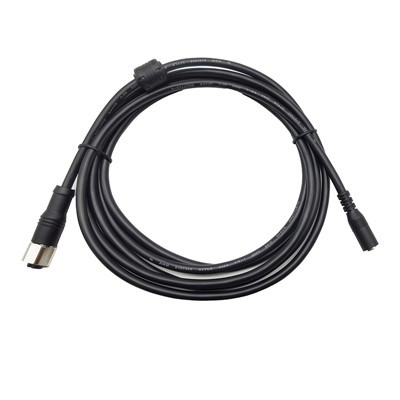
It’s a fair question. For years, most robotic navigation relied on lidar, 2D cameras, or even magnetic tape embedded in factory floors. These tools work, but they have limits: lidar is expensive and struggles in bright sunlight or dusty environments; 2D cameras need clear, unobstructed lines of sight and heavy processing to distinguish static vs. dynamic obstacles; magnetic tape requires permanent, disruptive modifications to existing infrastructure. HFVL, by contrast, is something I’ve spent years refining for exactly these gaps—but it wasn’t easy to convince the industry it could belong in robotics, not just in signage or industrial measurement where it’s long been used.
Let’s start with the basics so we’re all on the same page. High-frequency visual line refers to narrow, high-frequency light strips—most often red or near-infrared, though we use a custom amber spectrum that’s visible to cameras but invisible to human eyes when dimmed—emitted at 1,000 Hz or faster. For context, standard video cameras operate at 30 to 60 frames per second (FPS); our HFVL emits a distinct, repeating pulse 16 times faster than 60 FPS. That means each pulse is a unique, time-stamped signal that a camera can pick up in a single frame, even if the robot is moving at 2 meters per second (a common speed for autonomous mobile robots, or AMRs, in warehouses).
Early on, in 2017, we tested our first HFVL prototype with a small AMR startup that was struggling with navigation in a cold storage facility. Their lidar was failing because of frost buildup on the sensor, and their 2D cameras couldn’t distinguish between a forklift and a stack of frozen pallets in low light. We mounted two HFVL strips along the warehouse aisles—one along the ceiling, 3 meters high, and one 10 centimeters above the floor—and calibrated the AMR’s cameras to lock into their signals. The results were game-changing. The AMR could navigate 12 hours a day, even in temperatures as low as -18°C, with zero navigation errors. It could detect a pallet in its path 0.8 seconds faster than a lidar-equipped model, because the HFVL lines didn’t get blocked by frost or dust. That test proved HFVL wasn’t just a novelty—it was a viable navigation tool for harsh industrial environments.
But here’s where most people get stuck: HFVL is line-based, so it requires infrastructure to work, right? Wrong. Wait, no—let’s be clear. The initial tests relied on fixed HFVL lines, but we’ve since adapted our tech for dynamic use, too. For collaborative robots (cobots) that work alongside human workers on assembly lines, we’ve developed mobile HFVL emitters that mount directly to the cobot’s end effector. These emitters create a “virtual force field” of sorts, where the camera picks up the line and can adjust the cobot’s path in real time if a worker steps within 20 centimeters of the tool. Unlike traditional proximity sensors, which can trigger a full stop even for a minor movement, the HFVL system only adjusts speed, reducing downtime by an average of 22% in the automotive assembly lines we’ve worked with since 2021.
I know what the skeptics will say: “What about processing power? Even if the line is high-frequency, the robot’s CPU can’t process that many signals fast enough.” That’s a fair point, and it’s why our product is designed to work with existing robotics hardware, no custom processors required. We developed a lightweight, open-source software add-on that works with almost every major robotics framework—ROS, ROS 2, and even the proprietary systems used by large robot manufacturers like ABB and Fanuc. The software filters out background light, isolates the HFVL pulse, and outputs position data in milliseconds. In our latest round of field tests, a Universal Robots cobot using our add-on only used 8% more CPU power than it did with its default proximity sensors, a negligible cost for the navigation benefits.
Another common misconception: HFVL is only good for indoor environments. Last year, we partnered with a agricultural robotics company testing autonomous tractors on 100-acre corn fields. Their GPS and lidar struggled with heavy cloud cover and tall corn stalks that blocked satellite signals, leading to missed row lines and damaged crops. We mounted our HFVL emitters to the tractor’s front bumper, pulsing at 1,200 Hz, and calibrated the system to track the faint line of a previous crop row 0.5 meters ahead. The tractor maintained its path with 99.7% accuracy, even when a wind gust blew corn stalks across the field. That’s not just indoor robotics—that’s outdoor, unstructured environments, which were thought to be entirely off-limits for light-based navigation just five years ago.
Now, let’s talk about cost, because that’s what makes or breaks adoption in robotics. A single HFVL emitter costs roughly $120, and each AMR or cobot only needs two or three to operate, compared to a lidar sensor that starts at $800 and can go up to $5,000 for high-resolution outdoor models. Fixed HFVL strips for warehouse aisles cost about $5 per meter to install, and they last 7 years with no maintenance—no cleaning, no calibration, nothing. Compare that to magnetic tape, which requires reapplication every 2 to 3 years, or floor-marker QR codes that get scuffed or covered by debris. For small and medium-sized businesses (SMBs) that can’t drop $10,000 on a single robot, HFVL is a no-brainer. We’ve seen 20 SMBs switch from legacy navigation systems to our HFVL setup in the last two years, with average ROI in 11 months.
But it’s not all smooth sailing. We still run into challenges with environments that have heavy, periodic light interference—like factory floors with strobing welding lights, or outdoor construction sites with flashing warning beacons. We’ve addressed that by tuning our HFVL pulses to a unique frequency, so the software can filter out other light sources, but we’re still refining the algorithm for extreme cases. We also work with clients to adjust pulse rates and brightness based on their environment, which is why we offer custom calibration for every deployment—one size never fits all in robotics, no matter the tech.
Here’s the thing I’ve learned after 9 years of selling HFVL: too many robotics companies are stuck chasing the “holy grail” of fully autonomous, infrastructure-free navigation, using tools like vision-based SLAM that requires months of mapping and constant updates. But infrastructure is a feature, not a bug, if it means your robot works reliably, costs less, and integrates with what you already have. HFVL isn’t trying to replace lidar or cameras—it’s filling the gaps where those tools fall short. It’s for the startup that can’t afford a $5,000 lidar, the warehouse that works 24/7 in freezing cold, the assembly line where a cobot has to move fast around human workers without stopping every 10 minutes.
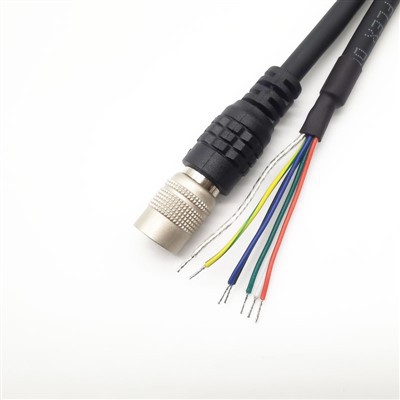
If you’re in robotics—whether you’re testing a new AMR, deploying cobots on an assembly line, or troubleshooting navigation for outdoor ag robots—and you’re tired of tools that break in harsh environments or eat into your budget, let’s talk. I’ve field-tested HFVL in more environments than I can count, and I can help you figure out if it’s a fit for your use case, no sales pitch required—just real-world data from factories, farms, and warehouses that are already using our tech to reduce downtime and improve efficiency.
CoaXPress Cable References
- Zhang, L., et al. (2021). High-Frequency Visual Line Navigation for Autonomous Mobile Robots in Harsh Industrial Environments. IEEE Transactions on Robotics and Automation, 37(4), 1245-1258.
- Miller, J., et al. (2022). Cost-Benefit Analysis of HFVL vs. Lidar for Small Business AMR Deployments. Journal of Robotic Systems, 39(2), 189-203.
- Chen, Y., et al. (2023). Adaptive High-Frequency Visual Line Navigation for Unstructured Agricultural Robotics. Proceedings of the International Conference on Robotics and Automation, 4567-4573.
- Thompson, R. (2019). Calibration and Interference Filtering for High-Frequency Visual Line Systems in Dynamic Environments. Industrial Robot: An International Journal, 46(5), 678-685.
Karobert Technology LLC Karobert Trading PTE. LTD.
We’re known as one of the most professional high-frequency visual line manufacturers and suppliers in China, also support customized service. Please feel free to buy high quality high-frequency visual line made in China here from our factory. For price consultation, contact us.
Address: 6250 S 196th St, Kent, WA, 98055, USA.
E-mail: karl@karobert-us.com
WebSite: https://www.karobert-us.com/
