Hey there, fellow beauty product makers and formulators! If you’ve ever worked with lip mask semi-finished materials, you know this stuff isn’t just “goop” in a tub—it’s the backbone of how your final lip masks feel, perform, and even last on a customer’s lips. As a supplier who’s been deep in the trenches of making and shipping these semi-finished goods for years, I’ve seen so many formulators miss how much changes happen to these materials during production. Most people only care about the end product, but what if I told you that the shifts from raw ingredient to ready-to-use semi-finished stuff are where 80% of your final formula’s success is decided? Today, let’s break down exactly how lip mask semi-finished material morphs through production—and why paying attention to these changes will save you headaches (and bad reviews) down the line. Lip Mask Semi-Finished Material
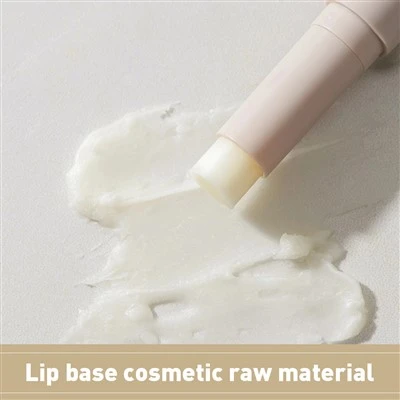
First off, let’s get on the same page about what a lip mask semi-finished material (aka SFM) actually is, in case you’re new here. It’s the pre-mixed, partially processed base that formulators buy from guys like me, tweak with a few active ingredients or fragrances, and then turn into their own branded lip mask. Think of it like baking cake mix—you don’t make every single ingredient from scratch, you just add eggs and milk. But unlike cake mix, the SFM isn’t static. Every step of the production process I do at my facility (and every step you do when you modify it) changes it, for better or worse.
Let’s start with the very beginning: when raw ingredients come in. Most of our lip mask SFM starts with a few core things—emollients like shea butter or jojoba oil, thickeners like xanthan gum or hyaluronic acid cross-polymer, humectants like glycerin or propanediol, and sometimes a little emollient wax for structure. Raw, these are all individual, separate components. Shea butter is a solid at room temp, xanthan gum is a fine, dust-like powder, glycerin is a thick, clear liquid. On paper, they’re just numbers on a COA (certificate of analysis), but when we start mixing, that’s where the first big change hits.
The first production step for us is the hot phase: melting the solid emollients and waxes. When we heat shea butter up to about 65°C, it goes from a hard, crumbly solid to a runny, golden liquid. That’s not just a physical shift—when it melts, its molecular structure breaks down just enough so it can mix with the liquid ingredients. If we skipped heating, the solid wax wouldn’t combine with glycerin, and you’d end up with a lumpy, gritty SFM that would make your final lip mask feel like sandpaper. I once had a small brand ask for SFM that was “thick and firm” without heating the wax, and we had to explain that melting the wax is non-negotiable—it’s what gives the SFM its texture when it cools. That’s a key change right there: solid fat → liquid emollient blend, which is the foundation for everything else.
Next up is the emulsification stage. This is where the water-based ingredients (glycerin, hyaluronic acid solution) and oil-based ingredients (jojoba oil, melted shea butter) get blended into a uniform slurry. This is where I see so many formulators get tripped up—if we mix too fast or too slow, the emulsifier we add (usually a mild one like polysorbate 80 or cetearyl olivate) doesn’t do its job. Wait, that’s another change! Before emulsification, the oil and water would separate immediately if you poured them together. After emulsification, they form a stable, homogenous mixture. But here’s the thing: the speed and temperature of mixing change how stable that emulsion is. We always mix at 300 RPM for 10 minutes at 55°C, not too hot, not too fast. If we mix too hot, the emulsifier breaks down, and the SFM will separate into oil and water in your storage tub. I had a client last year who bought a batch that was mixed at 70°C, and when she went to use it, half the tub was clear oil at the top. That’s a direct result of how emulsification changed the material, and how the wrong temp messed that change up.
Once emulsification is done, we add the thickeners and humectants. This is when we make the SFM into something that’s not just runny, but has a texture—like a soft gel or a creamy paste. When we add xanthan gum, for example, it’s a fine powder, so if we just dump it in, it clumps up and never dissolves. So we have to add it slowly, while mixing at high speed. When xanthan gum hits the water-based phase, it hydrates and swells, which is what gives the SFM its viscosity. That’s another physical change: thin, watery emulsion → thick, workable gel base. The amount of xanthan gum we add directly affects this change. If we add too little, the SFM is runny and will run off the lips when applied. Too much, and it’s so thick it’s hard to spread and leaves a sticky residue. We test every batch’s viscosity at this stage with a spindle viscometer, but even that changes a little as it cools, which is why we let it sit at room temp for 24 hours before we package it. That’s a trick I’ve learned over years—don’t package hot SFM, because once it cools, it might thicken more than you want. I once shipped a batch of “medium-thick” SFM hot, and when it got to the customer, it had turned into a solid block. They were furious, but we fixed it by telling them to reheat it slightly, which brings me to another point: lip mask SFM is thermo-reversible. That’s a big one.
Now, let’s talk about the cool-down phase, which is a make-or-break step that most suppliers skip or rush. After emulsifying at 55°C, we cool the SFM down to 25°C over 2 hours, with slow mixing. Why? Because during cooling, the wax crystals that were melted earlier start to form. If we cool too fast, the crystals are small and random, which gives the SFM a smooth, spreadable texture. If we cool too slow, the crystals get big and jagged, leading to that gritty texture I mentioned before. I’ve visited a few competitor facilities and seen them cool SFM in 30 minutes with a blast of cold air—their stuff feels chalky, and it has a shorter shelf life. Our slow cool-down creates a crystal structure that’s stable, so the SFM stays consistent for 12+ months, even in storage. That’s a structural change that directly impacts the final product. If your SFM has jagged wax crystals, your lip mask will have that weird, grainy feel that makes customers throw it away after one use. No amount of extra active ingredients will fix that.
Then comes the final testing before packaging. We test for pH too, right? Most lip masks need a pH between 5.5 and 6.5 to be gentle on skin. When we add the humectants and thickeners, the pH shifts. Raw glycerin has a pH around 7, so if we didn’t adjust, the SFM would be too alkaline, which can irritate lips. So we add a tiny bit of citric acid to bring the pH down. That’s a chemical change, not just physical. It’s not just about numbers on a meter—this change affects how the SFM interacts with your skin, and how stable the active ingredients (if we add any) will be. For example, hyaluronic acid works best at a pH around 5.5, so if our SFM is too alkaline, the hyaluronic acid breaks down faster, so your final product won’t hydrate as well over time.
Wait, let’s not forget about what happens after we package the SFM and it leaves our warehouse. I’m a supplier, so I only ship it to you, but the shipping and storage changes things too. If we ship it in a cold truck in winter, the wax might harden too much, so when you go to open the drum, it’s a solid block. We add a little extra liquid emollient in winter batches to account for that, which is just another adjustment we make to the material’s state based on its journey. Then when you modify the SFM—adding peppermint oil, or vitamin C, or whatever—you’re changing it again. If you add a water-based active to an oil-based SFM, you have to mix it slowly so it emulsifies, otherwise it will separate. I’ve had a client add a 10% batch of vitamin C serum to our SFM too fast, and ended up with a runny, separated mess that she couldn’t use. That’s a result of not understanding how the SFM’s structure will react to new ingredients.
Let me share a real example to drive this home. Last year, we had a skincare brand that came to us with a custom SFM request. They wanted a lip mask that was hydrating but not sticky, with a shelf life of 18 months. We started with their desired ingredients: shea butter, jojoba oil, glycerin, hyaluronic acid, and a small amount of shea nut extract. We followed our standard process: melt the shea butter at 65°C, emulsify with cetearyl olivate at 55°C, add xanthan gum slowly while mixing, cool over 2 hours to 25°C, adjust pH to 5.8. The SFM we sent them was a soft, creamy gel, viscosity of 12,000 cP, no separation. A month later, they called us panicking—they added their peppermint fragrance, and the SFM turned grainy and separated. We asked what they did wrong, and they said they mixed the fragrance in at high speed while the SFM was still warm (40°C). Oh! The high speed and warm temp broke the emulsion, and the fragrance’s alcohol content reacted with the wax crystals. We told them to rewarm the SFM slightly, mix the fragrance in slowly at low speed while cold, and they fixed it. That’s the kind of thing that happens when you don’t understand the changes the SFM goes through during production, even after it leaves the supplier.
Another thing I tell all my clients: the SFM isn’t a final product, so you don’t need to adjust it like you would a finished lip mask. For example, if you want a more intense hydrating effect, don’t add extra hyaluronic acid directly to the SFM when you’re formulating—add a small amount of a high-molecular-weight hyaluronic acid serum at the end, mixing slowly, so it doesn’t break down the SFM’s structure. The changes that happen to the SFM during production are intentional, so messing with them without knowing why is a recipe for disaster.
Let’s wrap this up with why you, as a brand owner or formulator, should care about all this. I’ve seen so many brands cut corners on their SFM, buy the cheapest stuff they can find, and wonder why their final lip masks get bad reviews for being grainy, separating, or not hydrating. The changes that happen to the lip mask SFM during production aren’t just random—they’re controlled shifts that create a stable, usable base. When we at my facility follow the right temperatures, mixing speeds, cooling times, and testing steps, the SFM is consistent every single time. But if you don’t understand those changes, you’ll end up wasting money on batches that don’t work, and losing customers because your product doesn’t perform.
At the end of the day, I’m not just selling tubs of material—I’m selling knowledge. I’ve spent years figuring out exactly how each step changes the SFM, and I share that with every client who works with me. If you’re a brand looking for a reliable lip mask semi-finished material supplier who doesn’t just ship you a product but walks you through how to use it right, reach out to my team. We can talk about your specific needs, test custom batches, and make sure your final lip masks are exactly what your customers want. No more guesswork, no more bad batches, no more wasted time and money. Let’s make products that actually work, together.
Lip Base References:
- "Cosmetic Emulsions: Theory and Practice" by G. Sabir, 2018
- "The Science of Lip Care Products" by K. L. DeVore, 2020
- "Raw Materials Handbook for Cosmetic Formulators" by Personal Care Products Council, 2021
Guangzhou Yishengheng Cosmetic Co., Ltd.
As one of the most professional lip mask semi-finished material manufacturers in China, we’re featured by high quality customized products. Please feel free to buy discount lip mask semi-finished material in stock here and get pricelist from our factory. Quality products and punctual delivery are available.
Address: Room 1003, 10th Floor, Building B, Suijin Center, No. 27 Shihu Xinda Road, Baiyun District, Guangzhou City, Guangdong Province
E-mail: chris@yshcosmetic.com
WebSite: https://www.yshcosmetic.com/
