When I first started working at our electric wire supply shop ten years ago, I used to think voltage ratings were just random numbers printed on the side of every cable—something to memorize, not really understand. Back then, I’d grab a spool of 14-gauge wire for a customer replacing a kitchen outlet, and never think twice about why that wire worked there and not in a garage subpanel. Now, after helping thousands of electricians, home renovators, and even DIY beginners sort through wiring questions, I can tell you: the voltage rating of an electric wire is one of the most critical specs to get right—and it’s way less confusing than it sounds, once you break it down. Electric Wire
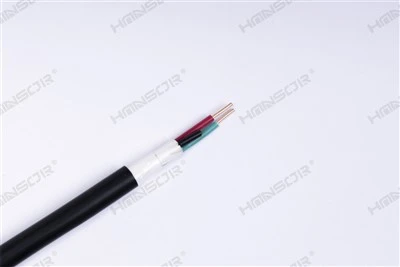
Let’s start with the basics, in plain terms, not the jargon that textbooks throw at you. Every electric wire is a pathway for electrons to move, and those electrons carry energy in the form of voltage. Think of voltage like water pressure in a garden hose: if you crank up the pressure (that’s higher voltage), a thin hose might burst, right? Same with wire: a “thick enough” wire for 120-volt indoor lights won’t work for a 240-volt electric water heater, because the pressure of those electrons is higher. The voltage rating, in simple words, is the maximum amount of electrical pressure a wire can safely handle over its lifetime—without overheating, melting insulation, or causing a fire. It’s not a suggestion; it’s a non-negotiable safety limit.
Now, here’s where I see most people (even a few rookie electricians!) get tripped up: voltage rating isn’t the only spec that defines a wire’s performance, but it’s the foundation. You’ll hear other terms thrown around—like ampacity (that’s how much current, or amperage, a wire can carry) and insulation type—but those two work hand-in-hand with voltage rating. For example, a common building wire like Romex (the non-metallic sheathed stuff you see at hardware stores) comes in two basic insulation classes: Type NM (non-metallic), which is rated for 600 volts. That’s for standard indoor use—kitchens, bedrooms, living rooms, anywhere you’re dealing with 120 or 240 volts for lights, outlets, small appliances.
Wait, I’ve had customers ask me: “Can I use 600-volt wire for a 120-volt outlet?” The short answer is yes—totally fine, just like using a heavy-duty garden hose for a tiny spigot. But never the reverse: never use a 300-volt wire for a 240-volt appliance. That’s like using a thin patio hose for a pressure washer—it’s going to break, guaranteed. I learned this lesson the hard way early on: a homeowner once came in panicking because he’d wired his new garage with 300-volt wire for his 240-volt car charger, and the wire insulation was warm to the touch after only an hour of use. I switched him to our 600-volt, 10-gauge stranded wire that same day, and he texted me a week later saying it ran cool and safe. That’s the real-life proof of why voltage ratings matter.
Now, let’s talk about why those numbers (like 300V, 600V, 1000V) aren’t just made up. Wire voltage ratings are set by two big organizations that every licensed electrician knows: the National Electrical Code (NEC) in the U.S., and the International Electrotechnical Commission (IEC) for global standards. These groups test every wire rigorously: they heat it up, bend it, expose it to moisture, cram it in tight spaces, and push voltage to the limit to see where insulation fails. The rating is the highest voltage the wire can survive that test, plus a big safety buffer—so when you see a wire marked 600V, it’s proven safe up to at least that, not just the exact number.
But wait, not all 600V wires are the same, and that’s where being a wire supplier means I have to listen closely to what a customer actually needs, not just sell them the cheapest spool. For example, we have Type THHN/THWN-2 wire— it’s 600V, but the insulation is rated for both indoor (THHN, heat-resistant) and outdoor (THWN-2, sunlight and moisture-resistant) use. So if a customer is wiring a backyard shed with a 240-volt air compressor, THHN/THWN-2 is the go-to. But if they’re running wire inside a panel for a commercial building, maybe we recommend a higher voltage rating, like 1000V wire, because commercial panels often have higher voltage systems, and using a higher-rated wire gives extra peace of mind in tighter, hotter spaces.
I also get a lot of questions about low-voltage wires, because more people are installing smart home stuff now—security cameras, doorbells, thermostats, landscape lights. A lot of these use 12 to 24 volts, way lower than 120V. Do those wires have voltage ratings too? Absolutely. I’ve had a homeowner buy a cheap 18-gauge wire from a big box store for their 16-volt doorbell, and a month later, the wire died because it was only rated for 30V. Even low-voltage systems need a wire that can handle the pressure—even if it’s small. We stock 18-gauge, 300V stranded wire for doorbells and security cameras, and it’s never let a customer down. The mistake people make here is thinking “low voltage means no risk,” but even a frayed low-voltage wire can short out if the rating is too low, especially if it’s routed near power lines or sharp edges.
Another point I tell every customer: voltage rating is tied to wire size too, but not in the way you might think. A 14-gauge wire (thinner, used for 15-amp circuits) is almost always rated for 600V. A 6-gauge wire (thicker, for 50-amp dryers or ovens) is also 600V. But a thin 20-gauge wire, used for headphone cords or small speaker wires, might only be rated for 30V—because it’s not built to carry more voltage, even though it’s thin. So size matters for current, but voltage rating is about insulation strength, how well the wire can hold up to electrical pressure.
I can’t talk about voltage ratings without mentioning a common myth I hear all the time: “If I put two 120V wires together, that’s 240V, so I need wire rated for more than 120V.” That’s exactly right. When you have two 120V legs in a circuit, the total voltage across them is 240V, so you need a wire rated for at least 240V. But in almost all cases, the standard building wire we stock—rated 600V—works here, because it’s way above 240V. The key is never to use a wire rated lower than the circuit’s voltage, no matter what.
As a wire supplier, my job isn’t just to sell spools. It’s to help people get the right wire for the job, and that means explaining voltage ratings in terms they can understand, not just reciting specs. Last month, a young electrician came in, stressed, because he’d bought the wrong wire for a commercial subpanel. He’d grabbed 300V wire when the panel needed 600V, and the whole order was wrong. We rushed him the correct 600V wire that day, and I walked him through why the rating matters—how tight spaces in panels make insulation heat up faster, so a lower-rated wire would fail prematurely, leading to costly calls back to the job site. That’s the part no textbook teaches you: real-world application, how a wire’s rating works with your specific project.
Another example: outdoor landscape lighting. A lot of guys will use standard 120V Romex for outdoor runs, but Romex isn’t rated for direct burial or sunlight. We recommend UF-B wire—underground feeder— which is 600V, made with waterproof, UV-resistant insulation that can sit in the dirt for years without breaking down. Using Romex here isn’t about voltage; it’s about the environment, but the voltage rating still matters because outdoor circuits for landscape lights are often 120V, so you need a wire that can handle that voltage and the outdoors.
I always leave customers with this rule of thumb when they’re picking wire: first, confirm the voltage of your circuit or appliance. If it’s a standard home outlet, that’s 120V—so a 300V or 600V wire works. If it’s an oven, dryer, or EV charger, that’s 240V—stick to 600V or higher. If it’s low-voltage for a smart device, check the device’s manual for voltage, then match the wire’s rating to that number, or higher. And never skip checking the insulation type too—waterproof, UV-resistant, heat-resistant—those tie into how the wire holds up to voltage over time.
I’ve been in this business long enough to have seen the bad outcomes when voltage ratings are ignored: a kitchen fire from underrated wire overheating, a garage short that blew a circuit and damaged a car charger, a security camera that died because someone used 30V wire for a 24V system. The good outcomes? A homeowner who put in a new kitchen with safe, properly rated wire that’s still working fine after 10 years, an electrician who finished a job on time because he had the right wire in stock, a business that didn’t have to pay for repairs because they used the correct voltage-rated cable.
At the end of the day, the voltage rating of an electric wire isn’t just a number on a spool. It’s a safety feature, a promise that the wire will do the job it’s meant to do, when you need it to. As a supplier, I don’t just sell wire—I help people make safe, smart choices, starting with understanding that little number that makes all the difference.

If you have questions about which voltage-rated wire is right for your residential, commercial, or low-voltage project, we’re here to help. Reach out to our team to discuss your specific needs and get expert recommendations tailored to your job.
Electric Wire References
National Electrical Code (NEC), Article 310, 2023 Edition.
International Electrotechnical Commission (IEC) 60227, Polyvinyl chloride insulated cables for rated voltages up to and including 450/750 V, 2020.
Underwriters Laboratories (UL) Standard 83, Nonmetallic-Sheathed Cables for Building Wiring, 2022.
Jiangsu Hansheng Cable Technology Co., Ltd.
With abundant experience, we are one of the most reliable electric wire manufacturers and suppliers in China. We warmly welcome you to buy bulk customized electric wire from our factory. If you have any enquiry about quotation and free sample, please feel free to email us.
Address: No. 18, Qingfeng Road, Touqiao Town, Guangling District, Yangzhou City, Jiangsu Province
E-mail: jshansor888@gmail.com
WebSite: https://www.hansorcable.com/
