If you’ve ever spent time browsing authentic Toyota engine parts, chances are you’ve stumbled across a lot of conflicting info online: some forums will swear every single Toyota engine component is stamped “Made in Japan,” while others claim most parts are outsourced to factories in Thailand, Mexico, or even the U.S. As a supplier who’s worked directly with Toyota’s approved parts networks for over a decade, I get why this confusion exists—Toyota’s supply chain isn’t as cut-and-dried as it once was, and there’s a lot of misinformation floating around for casual shoppers and small repair shops alike. Today, I’m pulling back the curtain on what actually goes into making Toyota engine parts, where they’re made, and what that means for buyers who want genuine, reliable components for their vehicles. TOYOTA Engine Parts
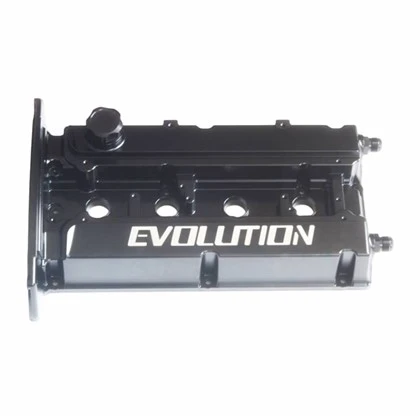
First, let’s clear up the most common myth: “All Toyota engine parts are made in Japan.” This was true for a long time, back when Toyota’s global expansion was still in its early stages and almost every core component for their iconic Corollas, Camrys, and Land Cruisers rolled off lines in Aichi Prefecture, where Toyota’s headquarters are located. But by the early 2000s, Toyota had shifted to a regionalized supply model to cut lead times, reduce shipping costs, and meet local demand for vehicles in fast-growing markets. That meant setting up plants in North America, Southeast Asia, and Latin America that could produce parts specifically for vehicles sold in those regions—without needing to ship thousands of miles from Japan.
That said, the core, high-stakes components of Toyota engines almost always have ties back to Japan, or are made under strict Toyota standards by approved partners who follow Japanese manufacturing protocols. Let’s break down what falls into which category, because that’s where most buyers get confused. If you’re buying something like a high-performance turbocharger, cylinder head castings, or the engine control unit (ECU) for a hybrid powertrain? Chances are that part is either made in Japan or at a Toyota-approved plant that’s audited directly by Japanese engineers. These parts are considered critical to Toyota’s quality and safety reputation, so Toyota keeps tight control over their production. For example, the 2ZR-FAE engine that powers many Corolla and Matrix models has cylinder heads cast in a Toyota-owned plant in Iwate, Japan, before being shipped to a final assembly line in Kentucky for North American-market vehicles.
The lower-stakes, more commoditized parts? That’s where you’ll see a lot of regional production. Things like engine gaskets, oil seals, timing belts, and even some valve components are often made in Thailand, Indonesia, or Mexico, under license from Toyota and to their exact specifications. I’ve seen this firsthand in my own supply work: we regularly source timing belt kits for Camrys sold in the Middle East from a Toyota-approved plant in Thailand, because the logistics of shipping that lightweight, high-volume part from Japan aren’t cost-effective for a market where demand is steady but not peak-level for Japanese-made goods. But here’s the key detail most people miss: even when these parts are made outside Japan, they still have to pass Toyota’s rigorous quality checks. A rejected valve from a Thai plant doesn’t get sent to a customer—it gets scrapped, no exceptions. Toyota’s global quality standards are uniform, no matter where a part is produced.
What about used or “generic” parts? That’s where the confusion really starts. If you’re buying a part from a third-party seller who isn’t an approved Toyota supplier, you might find parts labeled “Made in Japan” that are actually knockoffs, or genuine parts that were sourced from an unauthorized factory. Back in 2019, Toyota launched a huge crackdown on counterfeit engine parts after reports of faulty connecting rods that caused engine failures in hundreds of old Corollas—many of those fake parts were labeled “Made in Japan” but were actually made in unregulated factories in China. As an approved supplier, I can tell you that Toyota doesn’t just let any factory stamp a “Made in Japan” label on their parts. To get that designation, a factory has to meet specific criteria: they have to be audited annually by Toyota’s global quality team, use only Toyota-approved raw materials, and follow exact production timelines that align with Toyota’s supply chain.
Another common point of confusion is parts for classic Toyota vehicles. If you own a 1980s Land Cruiser or a 1990s Supra, a lot of the original parts for those models are still made in Japan, because the demand for classic parts is low enough that it doesn’t make sense to set up a new production line elsewhere. Toyota’s classic parts program (called Toyota Classic Parts) has factories in Japan that exclusively produce components for vintage models, from engine pistons to crankshafts, to keep those vehicles running. That’s a big part of why you’ll see so many vintage Toyotas with “Made in Japan” engine parts—those are factory-original or approved replacement parts for classic models.
Now, let’s talk about why this matters for you, whether you’re a mechanic working on a fleet of Toyotas or a hobbyist restoring an old pickup. The biggest mistake I see buyers make is assuming that “Made in Japan” equals “better quality,” or that parts from other regions are inferior. That’s just not true. Toyota’s global quality system is built on the concept of “jidoka”—automation with a human touch, which means every part, no matter where it’s made, gets inspected at multiple stages of production. A valve made in Mexico for a Tacoma engine will go through the same pressure tests and material checks as a valve made in Japan for a Land Cruiser. The difference is usually in cost and lead time, not quality.
But there is one caveat: core components that affect engine performance and safety. Let’s say you’re replacing the crankshaft in a rebuilt engine. That’s a critical part—if it fails, it can destroy the whole engine. Most of the time, those crankshafts are still made in Japan, because Toyota wants to keep tight control over the production of parts that have such a big impact on reliability. The same goes for hybrid engine parts, like the motor generators used in the Prius or RAV4 Hybrid. Those are almost exclusively made in Japan or at Toyota-owned plants in Aichi, because the technology is proprietary and Toyota doesn’t outsource that work to unvetted partners.
So where does that leave you as someone looking for genuine Toyota engine parts? The short answer is: it depends on the part. If it’s a core, high-stakes component, it’s likely made in Japan. If it’s a low-stakes, high-volume part, it could be made in any of Toyota’s approved global plants, but it will still meet Toyota’s standards. The worst thing you can do is take a part’s label at face value—always buy from an approved supplier, like the team I work with, who can tell you exactly where a part was made, provide proof of Toyota’s approval, and give you the warranty that comes with genuine parts.
I’ve been in this industry for long enough to see how the supply chain has changed. When I first started, every part I sourced for Toyota engines had a “Made in Japan” stamp. Now, I have a mix of Japanese-made core parts, Thai-made gaskets, Mexican-made valve seals, and all of them hold up to the same Toyota durability standards. That’s the point Toyota’s been making for years: quality isn’t about where a part is made—it’s about how it’s made.

If you’re in the market for genuine Toyota engine parts, whether for a routine replacement, a rebuild, or a classic vehicle project, we can help. Our team works directly with Toyota’s approved networks to source parts from the exact plants that meet your needs, whether you need a core component made in Japan or a cost-effective regional part. We provide full transparency on part origins, proof of authenticity, and competitive pricing for both individual buyers and small to large fleets. Reach out to our team to discuss your specific engine part needs, and we’ll help you find the right components for your vehicle.
TOYOTA Engine Parts References
Toyota Global Supply Chain Report, 2022
Toyota Quality Standards: Global Uniformity, 2021
NHTSA Counterfeit Auto Part Investigation Report, 2019
Toyota Classic Parts Program Overview, 2023
RCH Precision Machinery Co., Ltd.
With abundant experience, we are one of the most professional toyota engine parts manufacturers and suppliers in China. We warmly welcome you to buy high quality toyota engine parts at competitive price from our factory. If you have any enquiry about cooperation, please feel free to email us.
Address: No.71 Zhennan 3 road Tong’an Area Xiamen, Fujian, China
E-mail: mike@rchxm.com
WebSite: https://www.rchxm.com/
