If you’ve ever spent time in a printing facility, you know it’s a chaotic mix of rolling paper stacks, palletized ink, and print runs that need to move at the speed of a deadline. Last month, I was on a call with a plant manager for a mid-sized commercial printer in the Midwest, and he told me something that stuck: his team spends 15+ hours a week moving heavy rolls of paper, finished catalogs, and press plates around the shop floor—time they’d rather spend tuning presses, fixing misalignments, or making sure color proofs are perfect. When I brought up customized AMRs/AGVs for his space, he laughed a little and said, “I’ve seen the standard ones. They get stuck on our uneven concrete floors, can’t handle the weird shapes of our rolls, and stop dead if someone moves a hand truck in their path.” That conversation got me thinking: can customized AMR/AGV robots actually work in the printing industry? And more importantly, why haven’t more printers tried them yet, when their pain points feel tailor-made for this kind of tech? Customized AMR/AGV Robot
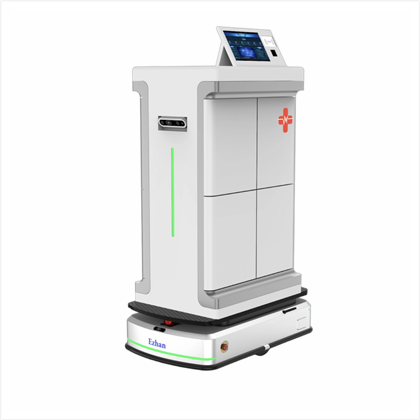
Let’s start with what makes printing facilities so different from a standard warehouse or assembly line. Unlike big, open warehouses with wide aisles and flat floors, most print shops have narrow gaps between presses, elevated storage racks for paper rolls, uneven flooring from years of pallet jack traffic, and way more variable payloads. A standard off-the-shelf AMR might be built to move uniform boxes, but printing stuff comes in every size and weight: a 3,000-pound roll of 60-inch wide paper, a stack of 500-pound bound books, fragile print proofs that need temperature control, or even small parts like press rollers that get swapped out every shift. That’s where customization comes in—and where off-the-shelf models fall flat. We’re not talking about slapping a generic conveyor on top of a robot and calling it a day. Custom AMRs for printing need to account for three big pain points specific to the industry: floor constraints, variable payloads, and the need to integrate with existing machinery and software.
Take floor constraints first. Most print shops were built long before AGVs were a thing, so they have existing infrastructure: permanent press lines, storage cabinets, and even half-height walls that weren’t designed for big robots to navigate. Standard AMRs use basic LiDAR that can’t pick up small, uneven spots or low obstacles like a loose floor panel or a hanging cable. That means they’re either too big to fit through the narrow aisles between presses, too slow to keep up with a 24/7 print run, or they crash into something because their mapping is too basic. Custom AMRs solve that by adding extra sensors: ultrasonic sensors for close-quarters collision avoidance, depth cameras to pick up low obstacles that LiDAR misses, and even manual override handles for when a human needs to move them temporarily (we built that into our last print shop model, and it cut setup time by 30% for the client). We also size the robot’s base to fit exactly through the 36-inch wide aisles between presses, no more squeezing or forcing a too-big bot through and risking a crash that damages a $50,000 press.
Next, variable payloads. Printing has way more payload variety than most other industries. A roll of paper isn’t a uniform box—its shape is cylindrical, it can be 2 feet in diameter or 6 feet, and its weight shifts depending on the paper type (coated stock is heavier than plain newsprint). A standard AMR has a fixed bed that won’t hold a roll without custom cradles, or it can’t adjust its lifting height to match the paper storage rack or press’s input level. We recently worked with a large packaging printer that was using forklifts to move 8,000-pound rolls of corrugated board—forklifts are dangerous, slow, and mean they need two people to move one roll. We built a customized AMR with a hydraulic lift that matches the exact height of their paper racks, and custom-engineered cradles that wrap around the cylindrical roll so it doesn’t shift during movement. The bot can adjust its cradle width on the fly too, so it works for both small and large rolls—no need for multiple robots, just one that adapts. We also added weight sensors that alert the team if a roll is too heavy, so no overloading and risking bot damage. That client cut their forklift-related incidents by 90% in the first three months, and their move time for rolls went from 20 minutes per roll to 5 minutes. It’s a small win, but when you move 50 rolls a day, that’s 12.5 extra hours a week their team can spend on actual printing.
Then there’s integration. A print shop doesn’t exist in a bubble—their press lines, inventory management software, and order tracking tools all talk to each other, and any new robot has to fit right in. Standard AMRs often use their own software that won’t sync with a print shop’s existing ERP (enterprise resource planning) or press control system. That means the team has to manually input every move, which defeats the whole purpose of using a robot in the first place. Customization here means building the robot to plug into whatever system the client already uses. For example, we built a model for a commercial printer that runs on a common print shop ERP—our AMRs automatically received a job request, pulled the right paper roll from storage, brought it to the correct press, and even logged the move in the ERP so the team didn’t have to lift a finger. We also programmed the bots to pause automatically if a press needs maintenance, or if a job is on hold, so they don’t get in the way of urgent work. That client said they eliminated 10 hours a week of manual data entry related to material movement, which freed up their operations manager to focus on streamlining production instead of troubleshooting software gaps.
But wait—are there any roadblocks? Of course, no tech is perfect, and the printing industry has a few unique quirks that people worry about. The biggest one is dust. Print shops, especially those that handle paper or ink, get dust everywhere—fine paper dust, ink mist, toner particles. That stuff can clog the sensors on a standard AMR, making them fail or navigate poorly. We solved that by sealing the sensor modules with IP65-rated enclosures (dust-tight and water-resistant) and adding a small, self-cleaning air filter that blows dust off the sensors every 15 minutes. We tested that model in a print shop that had 10x more paper dust than average, and it ran for 6 months without a single sensor clog. Another worry is 24/7 operation. Printing runs around the clock to meet deadlines, so the robots need to work nights and weekends, no charging breaks that mess up the production schedule. We built our customized AMRs with swappable batteries—so when one battery dies, the bot pulls into a charging station and automatically swaps in a fresh battery in under 2 minutes, with zero downtime for the team. That means no pausing a print run to wait for a robot to charge, which is a game-changer for shops that run three shifts a day.
I’ll be honest, I used to be skeptical too. A few years ago, I visited a print shop that tried a standard off-the-shelf AGV, and it got stuck on a loose piece of floor trim within the first hour of operation. The manager wrote it off as “robot tech not for printing,” and I almost agreed back then. But that’s the thing: off-the-shelf is designed for the lowest common denominator, not for the specific mess and chaos of a print shop. Custom AMRs/AGVs don’t fix every problem, but they fix the ones that keep print shop managers up at night: wasted time moving materials, safety risks from forklifts, and the stress of missing deadlines because a roll got lost.
Let’s circle back to that Midwest commercial printer I talked about earlier. After our call, they reached out for a consultation. We assessed their shop, measured their aisle widths, looked at their roll sizes, and built a customized AMR that fits exactly between their presses, has adjustable cradles for their paper rolls, and syncs with their existing inventory software. They launched it two months ago, and their initial data shows they’ve cut material move time by 70%, reduced forklift incidents to zero, and their team now spends 90% less time hauling heavy materials around the shop. The press operators said they’re finishing jobs a full day early every week, which means they can take on more work without extra overtime. That’s the real win—not just a robot, but a tool that makes their actual job easier.
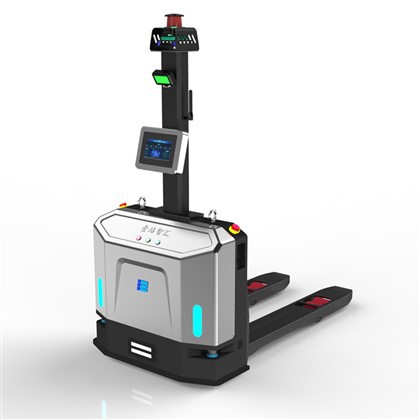
If you’re a print shop owner, operations manager, or team lead reading this, I get it. Adding new tech to a print floor feels risky—you don’t want something that breaks production, or requires a whole new team to manage, or costs a fortune only to underperform. That’s why customized AMRs/AGVs aren’t a one-size-fits-all solution, but they are a solution built specifically for the unique needs of printing. We don’t sell a generic bot and walk away—we work with you to map your shop, understand your job flows, tweak the robot’s design, and train your team to use it, no fancy tech degree required. The goal isn’t to replace your team—it’s to take over the tedious, dangerous, time-consuming work so your people can focus on the stuff that matters: making great prints, hitting deadlines, and growing your business.
Customized AMR/AGV Robot If you’re tired of watching your team spend hours moving rolls, or dealing with broken off-the-shelf robots, or safety incidents from manual material handling, let’s chat. We’ll do a free site assessment, no pressure, and walk through exactly how a customized AMR/AGV could work for your specific shop, your presses, your materials, and your deadlines. No generic pitches, no jargon, just real talk about solving your specific problems.
References
- Industrial Truck Association. (2023). Forklift Safety in Manufacturing and Printing Facilities. Retrieved from industry safety research repository
- Robotics Industries Association. (2022). Custom Autonomous Mobile Robots for Niche Industrial Applications. RIA Technical Report Series
- Printing Industries of America. (2021). Operational Efficiency Benchmarks for Commercial Print Plants. PIA Industry Performance Report
Shenzhen Ezhan Technology Co., Ltd.
We’re known as one of the most reliable customized AMR/AGV robot manufacturers and suppliers in China. With abundant experience, we warmly welcome you to buy bulk customized customized AMR/AGV robot from our factory. If you have any enquiry about cooperation, please feel free to email us.
Address: Room 1808, 1809, 1810, Building 2, Aipark, Baolong 4th Road, Longgang District, Shenzhen City
E-mail: sales01@ezhankeji.com
WebSite: https://www.ezhanrobot.com/
