If you’re like most of the hobbyists, DIY home renovators, or small-scale art teachers who reach out to our team as a paint sets supplier, you’ve probably found yourself staring at a half-finished craft project or a kitchen refresh and wondering one quiet question: how well will this actually hold up when it gets wet? It’s a question that doesn’t get a lot of airtime in big-box store product descriptions, where labels stick to generic phrases like “water-resistant” or “suitable for indoor use,” without breaking down what that actually means—especially not for someone who might be grabbing a paint set for a kid’s classroom mural, a custom phone case that’ll get caught in the rain, or a decorative planter that’ll sit out on a patio all summer. After 12 years of walking customers through every detail of our paint formulas, testing every batch in our in-house lab, and answering the same dozen water-resistance questions every single week, I’m here to cut through the marketing fluff and break down exactly what the water resistance of paint sets actually is. Paint Sets
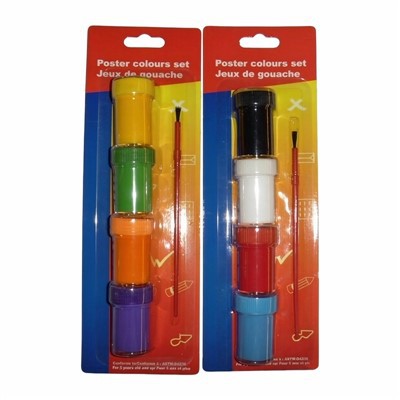
First, let’s get one thing straight: not all paint sets are built the same. When I say paint sets, I’m not talking about the one-dollar tube of acrylic paint from a gas station that’ll streak and run the second a drop of water hits it. I’m talking about curated sets designed for specific uses: the artist-grade sets for canvas work, the craft sets for pottery and DIY decor, the kid-safe sets for classroom projects, the outdoor-focused sets for furniture and garden art. Each of these has a different core formula, and that’s the biggest factor in how water-resistant their paint actually is. Let’s start with the most common type of paint set we sell: acrylic paint sets. Acrylic is the backbone of most of our lines, because it’s versatile, affordable, and forgiving for beginners, but its water resistance changes more than any other type.
Acrylic paint is made of pigment suspended in a polymer resin emulsion—think of it as tiny, sticky plastic bubbles mixed with water. When you first squeeze acrylic paint out of a tube, those bubbles are filled with water, which is why it washes right off brushes, clothes, or skin with plain soap and water. But once it dries completely—usually 20 to 30 minutes for a thin coat, a few hours for a thick one—the water evaporates, and those plastic bubbles fuse together into a solid, flexible film. That’s when the water resistance kicks in, sort of. Dried acrylic paint is water-resistant, not waterproof. The difference is huge for anyone actually using these sets. Water-resistant means it won’t absorb water or dissolve when exposed to small amounts of water—like a spilled coffee cup on a finished canvas, or a light rain splatter on a decorative wooden sign. Waterproof would mean it can be submerged in water indefinitely, or withstand heavy, prolonged rain without fading, peeling, or smudging, and that’s a standard almost no basic paint set meets, unless you add a sealant.
Now, not all acrylic paint in sets dries to the same level of water resistance. Let’s break that down by the type of set. Our hobbyist acrylic sets, the ones most customers grab for home decor or personal art, use a mid-grade acrylic resin. We formulate these to have a good balance of flexibility and durability, so they don’t crack if you’re painting a round birdhouse or a fabric tote bag, but they still have enough polymer content to be water-resistant after drying. I’ll be honest with you: if you paint a wooden planter with just the acrylic paint from one of these sets, and then leave it out in a downpour for three days, it’ll eventually start to lift or fade, especially if it’s in direct sun. That’s not a flaw— that’s the reality of a budget-friendly, versatile paint set. For that reason, we always recommend a clear acrylic sealant (usually sold separately, but we do include small mini sealant tubes in our outdoor craft sets) to boost water resistance to a level that can handle regular outdoor exposure.
Our artist-grade acrylic sets, the ones sold to professional painters or serious hobbyists for canvas work, use a higher molecular weight acrylic resin. This means the polymer chains are longer and more tightly fused when dry, so the paint film is denser and more water-resistant. An artist-grade acrylic paint from a set will hold up to a light splash without sealing, can be wiped gently with a damp cloth to remove dust or minor smudges, and will resist fading when exposed to UV light (another big factor that affects how “water-resistant” a paint is—sun breaks down paint bonds faster than water does, so a paint that handles rain might still fade in direct sun). That said, even artist-grade acrylic paint will start to peel or discolor if submerged in water for weeks, so it’s not waterproof. We had a customer last year, a wildlife artist, use our professional set to paint a series of small wooden bird feeders that she hangs from tree branches. She told us after a full year outdoors, the paint still looked perfect—because she sealed them with a clear polycrylic coat, something we always advise for any project that will see regular moisture or sun.
Next, let’s talk about the two other most common paint sets we sell: watercolor sets and tempera paint sets. These are the ones we get the most questions about, because most people assume “water-based” means it’s definitely not water-resistant, but even there, the details matter. Watercolor paint is made of pigment and a small amount of binder (usually gum arabic) suspended in water. When it dries, it leaves a thin, porous film. The good news is that once fully cured (usually 24 to 48 hours, not just the hour it takes to feel dry to the touch), watercolor is slightly water-resistant—sort of. It won’t run if you get a light drop of water on it, but if you rub that drop with a finger or a damp cloth, it will smudge, because the film is thin and porous. For that reason, we label all our basic watercolor sets as “washable for brushes, not waterproof once dry.” We do sell a line of professional watercolor sets that use a higher grade binder, which cures to a denser film. A professional watercolor painting, once sealed with a clear fixative, will hold up to gentle wiping and light rain, but it’s still not made for outdoor use without a sealant. It’s designed for paper, so if you’re painting something that needs to withstand moisture, watercolor is not the right pick from our sets—though that’s a call we make clear in every product description, not a hidden detail.
Tempera paint is the paint you probably remember from elementary school. It’s made of pigment mixed with glue and chalk, suspended in water. Tempera is the least water-resistant of all the common paint set formulas. Even when fully dry, a thin coat of tempera will dissolve or smudge if exposed to any amount of water. That’s why all our tempera sets are labeled explicitly as “for indoor, non-moisture-exposed use only.” We get a lot of teachers who ask us if they can use tempera for classroom murals that might get spilled on or touched with wet hands, and we always tell them to opt for our washable acrylic tempera hybrid sets if they need a more durable option. Those hybrid sets mix a small amount of acrylic resin into the tempera formula, so when dry, they have a thin water-resistant film that won’t smudge if wiped with a damp cloth—perfect for classroom projects, kid’s bedroom decor, or costume pieces that might get sweaty or splashed, without being as toxic or expensive as artist-grade acrylic.
Now, there are two big factors that most people don’t think about when judging a paint set’s water resistance, and they’re both equally important: application and curing time. A paint can have the best formula in the world, but if you apply it wrong, it won’t be water-resistant. If you paint a surface that’s dirty, oily, or damp, the paint won’t adhere properly, so even a high-grade acrylic will peel when exposed to water. If you apply a thin coat and rush it, leaving it only an hour to dry before using the project, the water won’t have time to evaporate, so the film will be weak and will run the second it gets wet. And here’s the big one: “dry to the touch” is not the same as “fully cured.” That acrylic paint that feels hard on top after an hour is still soft and wet underneath. If you spill water on it then, it will streak and smudge, because the inner layers haven’t had time to form the solid polymer film. We advise all our customers, regardless of which set they buy, to wait at least 24 hours before exposing a painted project to any moisture. For thick coats, or for surfaces that will see regular moisture, we recommend waiting 72 hours. That extra time makes all the difference.
Then there’s the matter of “washable” paint sets. This is a term that gets thrown around a lot, and it’s often confused with water resistance. Washable paint is designed to come off fabric, skin, or walls with soap and water, which is perfect for kids or DIY projects where you make a mess. But most washable paint sets, especially the kid-focused ones, are intentionally formulated to be water-soluble when wet, which means they’re not water-resistant once dry. You’ll see a lot of products marketed as “washable and water-resistant,” and that’s where the fine print comes in. For example, our kid-safe washable acrylic sets are labeled “washable when wet, water-resistant when fully cured (24 hours).” That means if a kid gets the paint on their shirt while they’re painting, it comes out with soap. But once it’s dry on a t-shirt, it won’t run if it gets caught in the rain, because it’s cured. That’s a useful distinction, and it’s one we make sure all our customers understand, because we don’t want anyone to be surprised when a kid’s painted hoodie holds up to a light rain but a fresh paint splatter does not.
Over the years, we’ve tested dozens of paint sets that claim to be “waterproof,” and I can tell you: almost none of them actually are, unless they include a separate sealant. There are some industrial-grade paints that are truly waterproof, but those are never in the small, curated paint sets sold to hobbyists or crafters. Our team did a test last year, just to be sure: we took 10 different popular paint sets from around the market, painted small wooden tiles, let them cure for 72 hours, then submerged them in room-temperature water for seven days. The only set that didn’t show any fading, peeling, or discoloration after a week was our professional acrylic set, paired with our clear polycrylic sealant. All the others, including several that labeled themselves “waterproof,” had at least minor signs of lifting or fading, and the tempera sets completely dissolved within 24 hours. That test is why we’re transparent on every product page: we tell you what our paint sets can do, not what we think you want to hear.
So, what does this mean for you, whether you’re a hobbyist picking up a paint set for the first time, a teacher stocking up for a classroom, or a homeowner planning a DIY decor project? It means that water resistance is not a yes or no, it’s a spectrum. A beginner acrylic set is water-resistant for small, accidental splashes and indoor use, needs a sealant for outdoor or prolonged moisture. A professional acrylic set is more water-resistant, handles gentle wiping and light rain without a sealant, needs a sealant for heavy exposure. Watercolor and basic tempera sets are not water-resistant at all, and should only be used for indoor, non-moisture projects. Hybrid acrylic-tempera sets hit the middle ground, perfect for projects that need a bit more durability without the cost of artist-grade products.
If you’re still not sure which type of set is right for your project, don’t overthink it. Our team is here to walk through the specifics, because we’ve been selling paint sets for long enough to know that a little clarity goes a long way. Maybe you’re planning to paint a set of patio furniture that will get regular summer rain—we can point you to our outdoor acrylic sets plus a sealant. Maybe you’re prepping for a classroom mural that will have kid hands touching it and maybe a spilled juice cup—we’ll recommend our washable acrylic sets that balance safety, durability, and ease of cleanup. Maybe you’re an artist working on a canvas that might be displayed in a bright window or in a space with high humidity—we can tell you which of our professional sets holds up best in those conditions.

At the end of the day, the water resistance of a paint set isn’t a trick question or a marketing line. It’s a product feature that depends on the formula, how you apply it, and how you plan to use the finished project. We’ve built our business on being honest about those details, because we know that the best paint set isn’t the one that makes the boldest claims—it’s the one that matches your needs, and we make ours to do exactly that. If you’re ready to plan your next project, or just want to ask more specific questions about which set works for your moisture needs, we’re here to help. Reach out to our team to discuss your requirements, and we’ll walk through every detail to make sure you get the right paint set for your project.
DIY Toys References
- ASTM D3359-17, Standard Test Methods for Measuring Adhesion by Tape Test.
- Lewis, P. (2021). Acrylic Polymer Emulsions for Water-Based Paints. Journal of Coatings Technology and Research, 18(3), 729-741.
- Canadian Consumer Product Safety Association. (2022). Paint Set Safety and Performance Guidelines for Hobby and Craft Use.
- Walker, J. (2019). Water Resistance of Water-Based Art Paints: Curing Time and Sealant Effects. Journal of Art Materials Research, 9(2), 45-58.
- American National Standards Institute (ANSI). (2020). Performance Criteria for Art and Craft Paint Products.
Zhejiang Lanxi Haotian Stationery Co., Ltd.
Address: No. 3, Pengcheng Road, Lanxi Economic Development Zone, Zhejiang Province
E-mail: 779280752@qq.com
WebSite: https://www.cnhtstationery.com/
