If you’ve ever worked with electronics, automotive components, or industrial machinery that runs hot enough to risk performance drops or part failure, you’ve relied on a heat sink without even realizing it. For most of us, the standard rectangular aluminum or copper heat sink we see attached to laptop CPUs or LED lights is the only one that comes to mind. But if you’re sourcing a custom heat sink—whether you’re building specialized medical diagnostic equipment, a high-power EV charging component, or a aerospace sensor array—one size never fits all. At our custom heat sink supply team, we’ve spent years working directly with engineers, product designers, and production teams to match the right heat sink shape to the unique thermal demands of their project. Over that time, we’ve seen that the most common custom shapes aren’t just aesthetic choices—they’re solutions tailored to specific heat loads, space constraints, and material needs. Let’s break down the shapes we recommend most often, why they work, and when to pick one for your next project. Custom Heat Sinks

The first and most versatile shape we encounter is the Plate Fin Heat Sink. If you’ve ever pulled a laptop apart, you’ve seen a version of this: a flat base plate with thin, parallel fins sticking straight up, all cut from a single piece of metal (usually aluminum or copper, though we work with other metals on request). What makes this shape so popular for custom orders is its flexibility. Unlike off-the-shelf plate fins, custom versions let us adjust the fin height, spacing, and thickness to fit exactly where it needs to go. For example, a team building a portable ultrasound machine recently came to us with a problem: they had a 1cm tall gap next to their power inverter, and the standard plate fin we supplied them before was too tall, so they had to route wires over it, which caused additional heat buildup. We reworked their plate fin to be 8mm tall, with fins spaced 2mm apart instead of the standard 3mm, and even tapered the edges of the fins so they slid easily into their tight space. The result was a 15% improvement in thermal dissipation, because the tighter fin spacing increased air turbulence without blocking the tiny fan they could fit in the limited space. The plate fin’s flat base also makes it ideal for bonding directly to a component surface—whether that’s a CPU, power module, or LED array—so there’s no gap between the heat source and the sink, which maximizes heat transfer. We see this shape used for everything from consumer electronics to industrial power supplies, partly because it’s relatively low-cost to manufacture compared to more complex shapes, and it’s easy to integrate with thermal interface materials like thermal paste or phase-change pads.
Next on the list is the Pin Fin Heat Sink, a shape that’s perfect when you need higher heat dissipation in a smaller footprint. Instead of flat, parallel fins, pin fin heat sinks use small, cylindrical, square, or even hexagonal pins arranged in a grid across the base plate. The pins can be as small as 1mm in diameter, depending on the material, and their spacing can be adjusted to match airflow. Why does this shape work better than plate fins for high-heat applications? Plate fins only move air along the length of the fin, so if your component is generating heat from multiple points spread across a wide area, air can get trapped between the parallel fins, creating dead zones where heat doesn’t escape. Pin fins, on the other hand, disrupt airflow more evenly throughout the entire surface, so every part of the heat source has access to moving air. We recently worked with an aerospace engineering team building a satellite sensor that generates 80W of heat in a 5cm x 5cm area—way too much for a standard plate fin to handle without taking up too much space. We designed a pin fin sink with 2mm square pins, arranged in a 10×10 grid, made from a high-conductivity copper alloy. The pin fin shape let us get 20% more surface area in the same 5x5cm space than a plate fin would have, and the grid layout meant air flowed through every pin, not just along one direction. That project had strict weight requirements too, and pin fins are lighter than plate fins of the same height, which was a huge win for their satellite. We also use pin fins for automotive applications, like high-power LED headlights, where the sink has to fit in a small housing and dissipate heat from a cluster of 10+ LEDs. The biggest tradeoff with pin fins is manufacturing cost—cutting or molding hundreds of tiny pins is more labor-intensive than making plate fins, but for projects with tight space and high heat, it’s almost always the best choice.
Another common custom shape is the Extruded Heat Sink with Custom Profiles. Extrusion is one of the most cost-effective ways to make custom heat sinks, and we don’t just do standard rectangular extrusions—we create profiles with unique cross-sections that fit exactly around a component. Extrusion works by forcing molten metal (usually aluminum, since it’s easy to extrude and has excellent thermal conductivity) through a die that has the shape of the heat sink’s cross-section. That means we can make a sink that has fins shaped like a “W” to fit around a rectangular power module, or fins that curve to wrap around a cylindrical battery cell in an EV pack. We worked with an electric scooter manufacturer last year who needed a heat sink for their 72V battery management system (BMS). The BMS was a long, narrow board, so a standard rectangular extruded sink would have left empty space at either end, which wasted material and added unnecessary weight. We designed an extruded sink with fins that only run along the middle 80% of the board, and tapered ends that match the BMS’s shape, so it fit perfectly without wasting metal. Extruded heat sinks also have the advantage of being easy to modify after manufacturing—we can cut them to length, drill mounting holes, or even bend parts of the fins to fit around other components once they arrive at our facility. The only limit to extruded profiles is that the cross-section has to be uniform along the entire length of the sink, so if you need a shape that changes height or width along its length, extrusion isn’t the right choice—for that, we use CNC-machined heat sinks.
CNC-Machined Custom Heat Sinks are the most flexible shape option, perfect for projects with extremely specific dimensions or non-uniform heat loads. Unlike extruded sinks, which are limited to uniform cross-sections, CNC machining lets us cut any shape out of a solid block of metal—from curved fins to circular bases, to sinks with integrated mounting holes, or even small cutouts to fit wires or sensors. We use CNC machining for a lot of medical device projects, where precision is non-negotiable. For example, a company building a portable blood analyzer came to us with a heat sink that had to fit between a small laser diode and a tiny optical sensor, with less than 0.5mm of clearance on all sides. If we’d used extrusion or plate fins, we would have had to leave a small gap, which would have caused heat buildup that could damage the sensor. Instead, we machined a solid aluminum block into a custom shape: it has a flat base that bonds directly to the laser diode, two small, curved fins that wrap around the sides of the sensor (without touching it, thanks to a 0.3mm gap we programmed into the CNC design), and a small cutout for the sensor’s wiring. The result was a sink that fit exactly in their tight space, and dissipated 12% more heat than the off-the-shelf sink they were using. The downside of CNC machining is that it’s more expensive than extrusion or plate fin manufacturing, especially for large sinks, because we’re removing material from a solid block. But for projects where space, precision, or custom shapes are non-negotiable, it’s the only way to go.
One shape that’s growing in popularity as more high-power electronics hit the market is the Vapor Chamber Heat Sink. This shape is a bit different from the others we’ve covered, because it’s not just a solid metal block or fins—it’s a sealed, flat chamber filled with a small amount of fluid that boils when it absorbs heat, then condenses on the cool sides of the chamber, moving heat away from the source much faster than a standard solid sink. Vapor chambers have a very flat, uniform base, so they’re ideal for high-power components that generate heat across a large area, like 5G base station transceivers or server CPUs. We recently worked with a telecom company that was upgrading their 5G base stations; their previous heat sinks were plate fins, but the new transceivers generate 120W of heat across a 10cm x 10cm area, and the plate fins couldn’t move heat away fast enough, leading to overheating in hot climates. We designed a custom vapor chamber that was exactly 10cm x 10cm, with a 2mm thick base, and bonded it to their transceivers. The vapor chamber is lighter than a solid copper sink of the same size, and it dissipates heat 30% faster, which let them operate reliably at temperatures up to 50°C without additional cooling systems. The big downside of vapor chambers is that they’re more expensive and harder to manufacture than other shapes, and they can’t be modified after production like extruded or CNC sinks, but for high-power, space-constrained applications, they’re a game-changer.
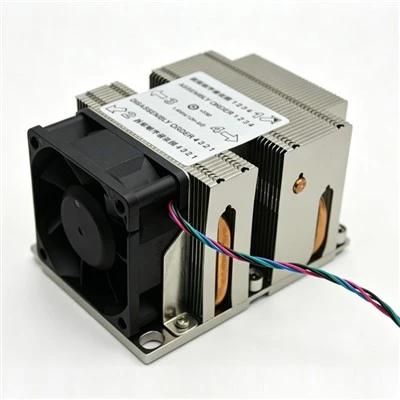
We also work with custom shapes for unique use cases that don’t fit into these main categories, like Heat Pipe Integrated Heat Sinks, which combine heat pipes (long, sealed tubes that move heat like a vapor chamber) with fins, so we can route heat from a component that’s in a hard-to-reach spot to a finned area where it can dissipate into the air. For example, a wind turbine manufacturer needed a heat sink for their generator’s power converter, which is located inside the turbine’s nacelle, 50 meters above the ground, and has to withstand constant vibration and temperature changes. We designed a heat sink with two heat pipes that routed heat from the converter, which is mounted on the side of the nacelle, to a set of pin fins mounted on the ceiling of the nacelle, where airflow is stronger. This shape let us move heat away from the converter without taking up space around it, and the heat pipes are sealed to withstand the vibration and extreme temperatures of the turbine environment.
One thing we always tell our customers is that there’s no “best” custom heat sink shape—only the right shape for your specific needs. A lot of engineers come to us assuming that a more complex, custom shape will always perform better, but that’s not true. If you have a standard space and a moderate heat load, a plate fin or extruded sink will work perfectly, and it will be more cost-effective than a CNC or vapor chamber sink. On the other hand, if you’re working with a high-power component that’s tight on space, you might need a pin fin or vapor chamber. We always start every project by asking three key questions: what’s the maximum heat load we need to dissipate, how much space do we have for the sink, and what’s the operating environment (temperature, vibration, humidity) of the component? Those answers will narrow down the shape right away. For example, if you’re building a wearable medical device that’s only 2cm wide and generates 10W of heat, a pin fin sink is probably the way to go, because you can fit more surface area in a small space. If you’re building a 10kW industrial power supply that has 10cm of space above the component, a plate fin extruded sink will be cheaper and work just as well.
At our custom heat sink supply team, we’ve worked on hundreds of projects across every industry, from consumer electronics to aerospace, and we’ve learned that the best custom solutions aren’t just about following trends—they’re about listening to our customers’ unique challenges. If you’re working on a project where off-the-shelf heat sinks aren’t cutting it, whether you need a tiny, precise shape for a medical device, a high-performance shape for an EV component, or a custom profile that fits around a unique part, we can help you design and manufacture the right heat sink. We take the time to walk through your project’s specific needs, offer guidance on which shape will work best, and adjust every detail to make sure the sink fits exactly where it needs to and does the job it’s supposed to.
If you’re ready to stop settling for heat sinks that don’t fit your project’s needs, or if you just have questions about which shape is right for you, reach out to our team to discuss your requirements. We’re here to help you find the perfect custom heat sink solution for your application, no matter how big or small your project is.
Zipper Fin Heat Sinks References:
- ASM International. (2020). Thermally Conductive Materials: Properties and Applications. Materials Park, OH: ASM International.
- Energy Efficiency & Renewable Energy (EERE). (2021). Heat Sink Design Guidelines for Automotive Power Electronics. U.S. Department of Energy.
- Incropera, F. P., & DeWitt, D. P. (2002). Introduction to Heat Transfer (4th ed.). John Wiley & Sons.
- NASA Goddard Space Flight Center. (2019). Thermal Control Handbook for Spacecraft Components. Greenbelt, MD: NASA.
- Society of Automotive Engineers (SAE). (2022). Thermal Management Systems for Electric Vehicles. Warrendale, PA: SAE International.
Dongguan Pioneer Thermal Technology Co., Ltd.
Dongguan Pioneer Thermal Technology Co., Ltd. is one of the most professional custom heat sinks manufacturers and suppliers in China. With abundant experience, we warmly welcome you to buy custom heat sinks made in China here from our factory. If you have any enquiry about quotation and free sample, please feel free to email us.
Address: Xiegang Village, Xiegang Town, Dongguan City, Guangdong Province, 523596, China
E-mail: vivian@ptheatsink.com
WebSite: https://www.coolingheatsink.com/
