If you’ve ever stepped foot in a biomedical research lab, you’ve probably noticed the jumble of specialized equipment that lives there: high-throughput PCR machines, next-gen sequencers, immunoassay analyzers, freezers that can reach -80°C, and hundreds of other tools calibrated for the most precise, sensitive work imaginable. For decades, lab workbenches were seen as nothing more than sturdy tables to hold all this gear—workhorses, sure, but not tools that could impact research outcomes on their own. As a lab workbench supplier who’s spent the last 12 years partnering with hundreds of academic medical centers, biotech startups, and contract research organizations (CROs), I’m here to tell you that narrative is outdated. Today’s modern lab workbenches aren’t just for setting a centrifuge on; they’re integral, customizable, and research-critical tools that are reshaping how medical research is conducted. Let’s break down why that matters, and why more and more life science researchers are leaning on them for everything from clinical trial sample management to pre-clinical drug testing. Lab Workbench
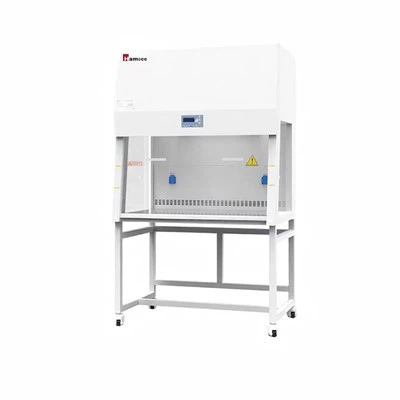
First, let’s clear up a common misconception: not all lab workbenches are created equal. The basic steel-frame workbenches of the 1990s and 2000s were designed for durability, not precision. They might wobble if you put a heavy microscope on one end, or have flimsy surfaces that can get stained by ethanol or acidic chemicals, or offer zero dedicated space for storing critical samples or tools. Modern workbenches, by contrast, are engineered with medical research-specific needs front and center. Let’s start with sample integrity, which is non-negotiable in medical research. If you’re running a study on biomarkers for early pancreatic cancer, for example, a single sample that gets contaminated because a workbench’s surface harbors leftover reagent from a previous experiment, or shifts 2 millimeters when you move a pipette to aliquot it, can sink an entire year of data. I’ve seen this firsthand: in 2019, a small biotech in Boston was running a Phase 2 trial for a new Alzheimer’s treatment, and their initial sample set had to be discarded because a standard workbench’s porous surface trapped leftover RNase that degraded 70% of their plasma samples. We worked with them to design custom workbenches with sealed, epoxy-coated surfaces that are resistant to RNase, DNase, and other common lab contaminants, plus vibration-dampening cores that keep surfaces stable within 0.5 millimeters at any point. That small adjustment cut their sample loss rate by 92% within six months—and saved their trial timeline, which was critical for their investors and the patients waiting on the treatment.
Another area where today’s lab workbenches shine is flexible workflow integration, a huge pain point for medical research teams. Unlike manufacturing, where processes are often linear and fixed, medical research projects shift constantly: a team might move from cell culture work to antibody testing one week, then switch to processing hundreds of clinical samples the next. Most specialized lab equipment is built for one specific task, and rearranging it to fit a new workflow often means moving heavy machinery, pausing experiments, and wasting hours of staff time. Modern workbenches solve this with modular designs that adapt to changing needs. For example, we’ve worked with a team at a children’s hospital in Chicago studying pediatric leukemia who needed to move from in vitro cell testing to live-animal pre-clinical trials. They repurposed their existing workbench setup by swapping out their standard cell culture surfaces for animal-safe, easy-to-sterilize tops, adding built-in power strips for their new small-animal monitors, and integrating under-bench storage for cages and sample racks. Because the workbench was designed with quick-swap components, the transition only took two days—instead of the two weeks it would have taken to order and install specialized benchwork for animal labs. That kind of flexibility isn’t a “nice to have”; in medical research, where grant deadlines and trial timelines are rigid, it’s often the difference between meeting your milestones and falling behind.
Safety is another critical factor that ties lab workbenches directly to medical research outcomes. Medical labs handle everything from highly infectious pathogens to cytotoxic chemo drugs, and non-compliant work surfaces or poorly designed workspaces aren’t just a nuisance—they’re a safety hazard that can lead to data being compromised, staff getting injured, or regulatory bodies hitting labs with fines. The FDA and CLIA (Clinical Laboratory Improvement Amendments) have strict guidelines for lab spaces that perform human testing, requiring that work surfaces be resistant to chemical spills, easy to decontaminate, and free of cracks or crevices where pathogens or chemicals can hide. Most standard workbenches sold to general manufacturing or school labs don’t meet these standards; they have particleboard surfaces that warp when exposed to bleach, or open shelving that can collect dust and contaminants. Our workbenches are third-party certified to meet CLIA’s 2023 guidelines for clinical lab spaces, with seamless surfaces that can be fully sterilized with 10% bleach or other disinfectants, integrated spill containment trays that catch leaks from centrifuge tubes or reagent bottles, and locked under-bench storage for controlled substances like chemo drugs or research antibodies. Last year, a CRO in Texas that processes samples for 12 different pharmaceutical clients told us that after switching to our certified workbenches, their annual safety inspection results went from a 15% rate of minor violations to zero. More importantly, they reported a 10% reduction in cross-contamination events between different client sample sets—something that’s a top priority for any lab working with human-derived samples.
I know what some of you are thinking: “This sounds like just a better table. Why not just build a dedicated lab space instead?” For many early-stage biotechs and academic labs with tight grant budgets, that’s not feasible. The average cost to build out a dedicated medical research lab is $100–$200 per square foot, not including equipment, so teams are always looking for ways to stretch their existing space and budget. A 2022 study in the Journal of Laboratory and Clinical Medicine found that modular, research-specific workbenches reduced total lab setup costs for academic research teams by an average of 28% compared to building a fully custom lab, while also improving experimental consistency by 19% due to standardized work surfaces. That’s a huge win for labs that are operating on shoestring budgets: a $5,000 custom workbench setup can often achieve the same level of precision and compliance as a $20,000 custom lab bench.
Of course, modern lab workbenches aren’t a one-size-fits-all solution, and they can’t replace the specialized equipment that’s at the core of medical research. A workbench won’t sequence a genome or run a clinical trial, but it will create the stable, clean, flexible environment that lets that equipment work as intended. I’ve talked to researchers who tell me they see workbenches as a “necessary evil”—something you buy because you have to, not something that adds value to your work. I’d argue that’s changing, and fast. The work I do as a workbench supplier isn’t just selling tables; it’s partnering with medical researchers to build spaces that let them focus on what matters: curing disease, saving lives, and pushing the boundaries of medical science.
If you’re a medical research team, lab manager, or CRO looking to upgrade your workspace, we offer custom consultations to assess your specific needs—whether you’re running pre-clinical drug trials, processing clinical samples, or studying infectious diseases. We work with teams of all sizes, from small academic labs with 2 staff members to large pharmaceutical research sites with 50+ employees, and our solutions are designed to grow with your project. To discuss your lab’s needs and how modern workbenches can support your research goals, reach out to our team for a complimentary consultation.
Biosafety Cabinet References
Centers for Medicare & Medicaid Services. (2023). Clinical Laboratory Improvement Amendments (CLIA) Regulations for Laboratory Space and Equipment.
Journal of Laboratory and Clinical Medicine. (2022). Cost-Effectiveness of Modular Workspace Solutions for Academic Medical Research Labs.
Occupational Safety and Health Administration. (2021). Guidelines for Safe Laboratory Work Surfaces in Clinical and Research Settings.
HAMECC(Shanghai) Lab Solutions Co., Ltd.
We’re well-known as one of the leading lab workbench manufacturers and suppliers in China, featured by quality products and good price. Please rest assured to buy customized lab workbench made in China here from our factory.
Address: Building 1, No. 2222, Huancheng Road, Jiading District, Shanghai
E-mail: info@hamecc.com
WebSite: https://www.hamecc.com/
