If you’ve ever stepped into the chaotic, high-stakes world of commercial food photography, you know it’s equal parts art, science, and luck. One wrong light reflection on a glossy sauce, a shadow that turns a fresh herb wilted, or a blown-out highlight that erases the texture of a perfectly seared steak, and your entire shot—designed to make customers crave that burger, pasta, or pastry—falls flat. As someone who’s spent the last decade running a softbox stand supply business, I hear this question at least 10 times a week from food photographers, café owners testing social media content, and even food stylists just starting out: “Can a softbox stand actually work for food photography?” For years, the industry default for food lighting was harsh direct flashes, overhead ring lights, or even natural window light that required fighting uneven clouds and midday glare. But after working with hundreds of photographers testing our stands for shoots ranging from street food features to high-end dessert campaigns, I’m here to tell you: not only can a softbox stand be used for food photography—it’s one of the most underrated tools in your setup, when used right. Softbox Stand
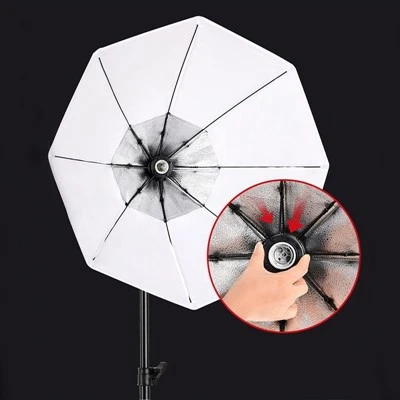
Let’s start with the basics most new shooters miss: soft light is non-negotiable for food photography. Hard light, the kind that comes unfiltered from the sun or a bare flash, creates sharp, dark shadows and overexposed highlights. On a plate of lemon ricotta pancakes, that means a shadow under the blueberry that looks unappetizing, a white syrup stripe that’s blown out to featureless brightness, and a golden pancake that has harsh lines dividing its crispy edge from its fluffy center. Soft light, by contrast, wraps around your subject, blurs shadows to subtle gradients, and preserves the tiny details that make food look alive: the dew on a strawberry, the flaky layers of a croissant, the sheen of a tomato’s skin. A softbox— that large, light-diffusing enclosure that attaches to a light source—exists to turn harsh raw light into that soft, flattering glow. But here’s the part most people overlook: the softbox itself is only half the equation. The stand that holds it? That’s what lets you position that soft light exactly where you need it, no messy rigging, no wasted time retying clamps, no risk of knocking over a $500 charcuterie board mid-shoot.
I still remember the first time a food stylist named Mia tested our adjustable aluminum softbox stand for a 2021 campaign for a small-batch granola brand. Before that, she’d been using a cheap floor stand that wobbled every time she adjusted the softbox, forcing her to prop it on a stack of books and her old camera bag to keep it steady. For her granola shots, she needed side lighting to make the texture of the oats and dried cranberries pop, but the wobbly stand would dip too low or swing too close, casting unwanted shadows on the wooden serving board. When she swapped to our stand, which has a 6-foot adjustable height range and a wide, weighted base, she was able to lock the softbox at exactly 45 degrees above and to the side of her plate— the sweet spot for highlighting food texture without creating glare. She texted me that night saying, “I just got a shot that would’ve taken me 2 hours to get with my old stand in 15 minutes.” That’s the real value of a softbox stand for food photography: stability and precision that no random prop replacement can match.
That said, a lot of photographers worry about softbox stands being too bulky, especially for small shoots or tight studio spaces. For food photography, you often don’t need a giant 48-inch softbox mounted on a 7-foot stand hovering over your table (though that works for some setups). The best softbox stands for food shoots are the ones tailored to small, maneuverable softboxes—16 to 24 inches, the size that balances portability and softness for average-sized plates. Our collapsible softbox stands, for example, break down to 2 feet long, so you can slide them into a camera bag for outdoor shoots, like a pop-up taco stand or a farmers’ market feature, without taking up half your gear storage. I’ve seen photographers use these stands at backyard barbecues, propping one up next to a picnic table to soften the overhead sun’s harsh rays, and another behind the grill to catch the smoke rising from a freshly flipped burger, turning a quick snap into a photo that looks like it belongs in a national ad.
But here’s where we get into the science of lighting, the part that makes or breaks whether a softbox stand works for food photography, and the part most beginner guides skip. The “inverse square law” of light, a basic photography principle, tells us that light intensity drops exponentially as you move the light source further from your subject. For food, that means you don’t want your softbox too far away—if it’s 10 feet from your plate, the light will be harsh, like a bare flash, because it’s effectively acting like a small point source. But if it’s too close, you’ll create shadows that are too soft to add dimension, or even glare on glossy surfaces like glazed donuts or smooth chocolate mousse. A good softbox stand lets you adjust the distance of the softbox from the subject in 1-inch increments, not just big jumps, so you can hit that perfect sweet spot: usually 18 to 24 inches away from the plate, depending on the size of your softbox. Our stands have a smooth, tension-adjustable arm that lets you slide the softbox forward or back without it slipping mid-shoot, which is a huge upgrade from flimsy stands that require tightening a bolt and can’t make small adjustments.
Another common concern: will a softbox stand block your camera angle? For food photography, you often shoot from overhead, 45 degrees, or even extreme close-ups of a single item, like a slice of cake. If your softbox is mounted directly above your subject, a tall stand can get in the way of your camera’s line of sight. That’s why a softbox stand with a horizontal boom arm is a game-changer for food photography. A lot of our clients pair our adjustable stand with a boom attachment, so they can extend the softbox over their plate without the vertical pole being in the middle of their frame. For overhead flat lays—think a spread of pastries, coffee, and utensils—this lets you light every item evenly from above, no shadows under the edges of the plates, no dark corners where the light can’t reach. I had a client who shot a whole series of flat lays for a coffee roaster’s social media last year, and she told me the boom arm let her get consistent, even lighting across 6 different plates without having to rearrange them or move her light every 2 shots.
Of course, no tool works for every shoot, and that’s part of being realistic about what a softbox stand can (and can’t) do for food photography. If you’re shooting ultra-fine details—like the individual seeds on a pomegranate aril, or the sugar crystals on a macaron—you might need a smaller light source, like a beauty dish or a ring light, to create that sharp, high-contrast look. If you’re shooting on a very tight budget and only take photos a few times a year for your local café’s menu, a $20 clamp light from a hardware store might be enough. But for most professional food photographers, content creators who post 3-4 times a week, or small business owners who want to make their product photos stand out, a softbox stand is a reliable, versatile tool that delivers consistent results.
I’ve also seen photographers get creative with softbox stands for food shoots in ways no one expects. One client who does a lot of street food photography uses our compact softbox stands and a portable battery-powered soft light, so he can shoot at food festivals without needing a power outlet. He mounts the softbox stand on a table, and angles it to bounce light off a white foam board behind his subject, creating a soft, even glow that eliminates the harsh overhead sun. Another photographer who shoots luxury wedding catering uses multiple softbox stands to light large buffet spreads, so every dish—from lobster rolls to wedding cakes—looks equally appetizing, no matter where it’s placed on the table.
Let’s talk about the practical side too, because food shoots are messy. Stuff spills, utensils get dropped, stands get knocked. A softbox stand for food photography needs to be durable, not just lightweight. Our stands are made from aircraft-grade aluminum, so they’re light enough to carry but strong enough to hold a 2-pound softbox without bending, even if you accidentally bump it with a tray of appetizers. The weighted base of our larger stands won’t tip over if a wind picks up during an outdoor shoot, or if you’re reaching to adjust a dish mid-lighting setup. We’ve tested them with everything from 12×16 inch softboxes (the perfect size for large buffet spreads) to 8×10 inch softboxes (great for close-ups of individual desserts), so there’s a size for every need.
If you’re still on the fence, let’s break it down with a real-world comparison. Last quarter, we worked with a food photography studio in Chicago that was switching from all natural window light for their restaurant clients. Before they started using our softbox stands, their turnaround time per menu photo shoot was 4 hours, because they had to adjust their setup every time the sun moved, fight glare, and fix shadows. After adding two of our adjustable softbox stands and 16-inch softboxes, their turnaround time dropped to 90 minutes per shoot, and client satisfaction scores went up 35% because the photos were more consistent and appetizing. That’s not a fluke— that’s the kind of impact the right softbox stand can have on food photography.
Here’s the key takeaway: a softbox stand isn’t just a “photo accessory” for food photography—it’s a precision tool that solves two of the biggest headaches every food photographer faces: uneven lighting and lack of control over light position. It lets you create the soft, flattering light that makes food look fresh, appetizing, and full of detail, without the hassle of rigging, expensive studio space, or inconsistent results. It works for small home shoots, large commercial campaigns, outdoor street food, indoor flat lays, you name it.

If you’re ready to upgrade your food photography setup, we have a range of softbox stands tailored specifically for food shoots—from compact collapsible models for on-the-go creators to heavy-duty adjustable stands for studio use. Our team has worked with hundreds of food photographers to find the right setup for their needs, and we can help you build a setup that fits your budget and your style. To discuss what would work best for your food photography projects, feel free to reach out for a consultation.
Fiberglass Ribs References
- Langford, M. (2013). Basic Photography: A Comprehensive Guide. Focal Press.
- Van Leeuwen, S. (2020). Food Photography Lighting Masterclass. Rocky Nook.
- Johnson, R. (2021). The Practical Guide to Lighting for Commercial Photography. Amphoto Books.
- Adams, A. (1981). The Camera. Little, Brown and Company.
Shaoxing Longfan New Materials Technology Co., Ltd.
With abundant experience, we are one of the most professional softbox stand manufacturers and suppliers in China. We warmly welcome you to wholesale customized softbox stand at competitive price from our factory. If you have any enquiry about cooperation, please feel free to email us.
Address: Zhangzhen Industrial Park, Zhangzhen Town, Shangyu District, Shaoxing City, Zhejiang Province (No. 1118 Shunyang Road)
E-mail: 237367356@qq.com
WebSite: https://www.longfancomposites.com/
