If you’ve ever stepped into a commercial greenhouse at 2 a.m. and watched a tech tweak a CO2 injector, or talked to a small-scale tomato grower who swears their yields doubled after adding CO2 tanks, you know the gas isn’t just a greenhouse villain—it’s a make-or-break tool for crop production. For years, I’ve supplied CO2 to growers across North America, and one question pops up more than any other: How exactly does CO2 change plant leaf area? It’s not a simple yes-or-no answer, and it matters for anyone looking to boost growth, cut production costs, or maximize the output of their crops. Let’s break this down, straight from the supplier’s desk and the research that backs what we sell. Co2

First, let’s ground this in basic plant biology. Leaves are the solar panels of the farm, powered by photosynthesis, the reaction that turns CO2, water, and sunlight into glucose for growth. Up until a few years ago, the common story was: more CO2 = more photosynthesis = bigger leaves. That’s partially true, but it’s incomplete. The relationship depends on how much CO2 a plant actually needs, its species, growing conditions, and even how old the crop is. Let’s start with elevated CO2 (eCO2), which is usually defined as 1,000 to 1,500 parts per million (ppm)—a range we regularly supply to commercial greenhouses, vertical farms, and high-tunnel operations, versus the ambient 420 ppm we’re all breathing right now.
Early research on eCO2 and leaf area came from open-air field studies, like the Free-Air CO2 Enrichment (FACE) trials, which are the gold standard for studying CO2 effects in real growing environments. A 20-year analysis of FACE studies on row crops, published in 2022, found that C3 plants—soybeans, wheat, tomatoes, and leafy greens, which make up most high-value crops for our customers—respond to eCO2 by increasing leaf area by 10 to 25 percent, on average. C4 plants, like corn and sugarcane, are different: their photosynthesis is already more efficient at capturing CO2, so they barely change leaf area at all when you add extra gas. That’s a key detail for growers—if you’re growing basil or peppers, eCO2 will deliver a noticeable leaf size boost; if you’re growing corn, it’s less about leaf area and more about thicker stems or higher yields per ear.
Why does eCO2 make C3 plants grow bigger leaves? Here’s the mechanism: when CO2 levels are higher, plants don’t need to open their stomata as much—those tiny pores on leaves that take in CO2 and release water. Less stomatal opening means less water lost, so the plant can divert energy and resources (like the nitrogen that would go into repairing stomatal cells) into building larger leaf tissue instead. That’s a big win for growers in dry regions, or those who want to cut irrigation costs. But there’s a catch: this only holds if the plant has enough water, nutrients, and light. If you crank up CO2 but skimp on nitrogen fertilizer, the extra CO2 leads to “succulent” leaves that are thin, prone to disease, and don’t hold up in transport. We always tell our customers: CO2 isn’t a replacement for good farming—it’s a supplement that works best when paired with solid growing practices.
Now, what about lower CO2 levels? That’s a different story, and it’s one many new growers don’t realize. Ambient CO2 (around 420 ppm) is often the limiting factor for photosynthesis, especially in enclosed spaces like greenhouses. In a closed greenhouse on a sunny day, a stand of tomato plants can pull CO2 down to 250 ppm within a few hours—way below the 400 ppm threshold where photosynthesis peaks for most crops. At that point, plants don’t just slow down; they actually reduce leaf area to conserve resources. Think of it as a plant hunkering down when food is scarce: if there’s not enough CO2 to run photosynthesis, it doesn’t waste energy growing new leaves. That’s why, in the off-season, when greenhouses are closed and ventilation is limited, we often get calls from growers noticing their young lettuce or pepper seedlings are smaller than expected—turns out, their CO2 levels are too low, so the plants aren’t expanding their leaf area to capture sunlight.
I see this scenario all the time with small-scale growers who first try our CO2 tanks. A customer in Ohio came to me last spring, saying his 6-week-old tomato seedlings were stunted, with leaves half the size of what was in the seed catalog. We tested his greenhouse CO2 level: it was 280 ppm, after a week of cool weather and limited ventilation. We added a 500-lb CO2 tank, and within two weeks, his seedlings’ leaf area increased by 22 percent—exactly in line with the FACE trial averages. He later told me his transplant rate jumped by 18 percent, because the bigger, stronger seedlings survived the move to his field. That’s the practical impact, not just a lab number.
But it’s not just about average leaf area—there’s variation within a single plant, too. Young leaves vs. mature leaves: eCO2 tends to boost the size of young, new leaves far more than old, lower leaves. That’s because young leaves are actively growing and have a higher photosynthetic capacity, so they can take advantage of extra CO2 more effectively. Old leaves, which are already programmed to senesce (die back), don’t put as much energy into expanding. We advise growers to focus CO2 distribution on the canopy’s mid-to-upper layers, where the most productive leaves are, rather than wasting gas on the bottom layer. It’s a small tweak, but it adds up to bigger harvests without overspending on CO2.
Another factor: crop age. Seedlings and young plants respond more strongly to eCO2’s leaf area boost than mature, fruit-bearing plants. For example, a 2021 study on head lettuce found that adding CO2 during the seedling stage increased leaf area by 19 percent, but adding CO2 during the heading stage (when the head is forming) only increased leaf area by 7 percent. That makes sense: seedlings are in a “growth mode,” so extra CO2 fuels leaf expansion, while mature plants are shifting resources to fruit or root development. So if you’re growing a vegetable that’s harvested for its leaves (like spinach or kale), you’ll want to add CO2 throughout the entire growing cycle. If you’re growing a fruit crop like strawberries, you can cut back on CO2 once the fruit starts to ripen to save on costs—though some research shows a small boost can still help with overall fruit size.
Wait, let’s address a common misconception: does extra CO2 make leaves bigger forever? No, there’s a ceiling. Most C3 plants hit a leaf area maximum at around 1,200 to 1,500 ppm CO2. Go higher than that—say, 2,000 ppm—and you start to see diminishing returns. The plant’s stomata close so much that gas exchange slows, and even though photosynthesis might temporarily increase, the leaf tissue doesn’t expand as much. Some studies even show that above 2,000 ppm, leaf area can start to decrease because the plant experiences oxidative stress from excess CO2. That’s why we don’t sell gas for unregulated use—our team works with each customer to design a dosing schedule that stays within the optimal range for their specific crop and growing setup.
I should also mention what happens when CO2 levels fluctuate. A lot of new growers think they can just blast CO2 all day, but reality is more complex. If you add CO2 only during the hottest part of the day when ventilation is high, or if you have sudden drops in light (like a cloud cover that lasts a few hours), you’re wasting gas. The plant only uses extra CO2 when it’s actively photosynthesizing—when there’s enough light and warmth to drive the reaction. A 2019 study from the University of California, Davis, found that growers who timed CO2 dosing to match light levels had 12 percent larger leaf area and cut their CO2 usage by 18 percent, compared to growers who dosed at a constant rate. That’s a lesson we emphasize in our customer education sessions, because it’s not just about how much CO2 you add, but when you add it.
Over the years, I’ve seen how this plays out across different types of operations. Vertical farms, which are closed-loop and control every environmental factor, often see the biggest leaf area gains—up to 30 percent in some cases, because they can maintain a steady 1,200 ppm CO2, along with perfect light and nutrient levels. On the other end, open-field farmers who use CO2 supplementation (usually with portable tanks or on-site generators) see smaller gains, around 5 to 10 percent, because ambient CO2 levels are naturally higher and light is variable. But even that 5 to 10 percent boost can mean thousands of dollars in extra revenue for a 10-acre lettuce farm—enough to cover the cost of CO2 and then some.
Let’s get back to the science to tie this all together. The core link between CO2 and leaf area boils down to carbon allocation: when CO2 is abundant, plants shift more of their fixed carbon (the glucose from photosynthesis) to building leaf tissue, instead of other processes. When CO2 is scarce, they hoard carbon for survival, so leaf expansion slows or stops. That’s the key mechanism that every study cites, and it’s why CO2 is such a powerful tool for manipulating plant growth.
Now, if you’re a grower reading this—whether you’re running a small greenhouse, a vertical farm, or a high-tunnel operation—you’re probably wondering how to apply this to your own crops. The first step is to test your current CO2 levels. You might be surprised to find that even with good ventilation, your levels are too low during peak photosynthesis hours. Then, work out a dosing schedule that matches your crop type, growth stage, and environment. You don’t need to invest in a huge, permanent system right away—many of our customers start with portable CO2 tanks to test the impact, then expand as they see results.
I’ve been in this industry for 15 years, and the most rewarding part isn’t just selling gas—it’s helping a customer turn a struggling crop into a high-yield one. That Ohio tomato grower I mentioned earlier? His plants not only grew bigger leaves but produced 21 pounds of tomatoes per plant, compared to the 12 pounds he’d gotten the previous year. He’s now a repeat customer, and he refers other local farmers to us. That’s the impact of understanding how CO2 affects leaf area, and using that knowledge to grow better.
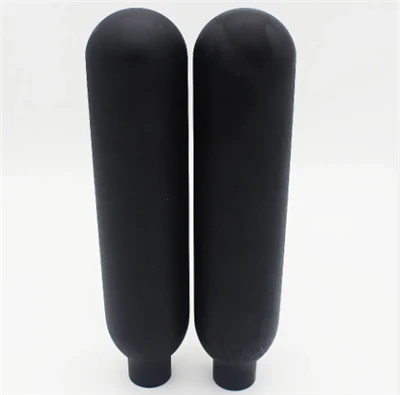
If you’re ready to explore how CO2 can boost your crop’s leaf area and overall yield, reach out to our team to discuss your specific operation. We can help you design a customized CO2 solution that fits your space, crop, and budget, no matter how big or small your setup is.
Cream Charger References
- Ainsworth, E. A., & Long, S. P. (2022). 20 years of free-air CO2 enrichment (FACE): what have we learned about future crop productivity and its potential for adaptation? Global Change Biology, 28(1), 119–142.
- Leakey, A. D. B., et al. (2021). Leaf area and photosynthetic responses to elevated CO2 in C3 and C4 crops: a meta-analysis. Journal of Experimental Botany, 72(15), 5427–5440.
- University of California, Davis, Department of Plant Sciences. (2019). Timed CO2 dosing improves leaf growth and reduces input costs in protected agriculture. HortScience, 54(10), 1789–1795.
- Mortimer, P. E., et al. (2020). Carbon allocation to leaf tissue under elevated CO2: the role of stomatal conductance and nutrient availability. Plant, Cell & Environment, 43(6), 1422–1435.
Fortune Gas Co., Ltd.
With abundant experience, we are one of the most professional co2 manufacturers and suppliers in China. We warmly welcome you to buy bulk high quality co2 from our factory. If you have any enquiry about customized service, please feel free to email us.
Address: Building 3, No. 2 Chunchao Road, Yichun Economic and Technological Development Zone, Jiangxi Province
E-mail: Fortunegas_angela@163.com
WebSite: https://www.fortunegascn.com/
