As a high voltage diesel generator set supplier, I’ve spent the last decade working with commercial facilities, data centers, and industrial plants that rely on our equipment to keep operations running during outages. Over that time, I’ve learned firsthand that compliance with local, national, and international regulations isn’t just a box to check—it’s the line between a generator that works when you need it and one that can cause costly fines, safety hazards, or even legal shutdowns. Too often, buyers focus on power output and upfront cost without accounting for the regulatory maze that governs high voltage diesel generators, and that’s a mistake I’ve helped clients correct more times than I can count. High Voltage Diesel Generator Set

Let’s start with what “compliance” actually means for high voltage diesel generators. Unlike residential or low-voltage units, high voltage systems (generally 1kV and above) fall under strict rules from bodies like the International Electrotechnical Commission (IEC), the Occupational Safety and Health Administration (OSHA) in the U.S., the European Committee for Electrotechnical Standardization (CENELEC) in the EU, and national agencies like the China Electricity Council (CEC) for projects in Asia. Regulations cover everything from emissions to wiring to maintenance, and non-compliance isn’t just a paperwork issue—it can lead to OSHA fines of up to $15,625 per serious violation, plus additional penalties for repeat offenses, according to OSHA’s 2024 penalty guidelines. For commercial clients, that’s a risk no budget should absorb.
One of the first mistakes I see buyers make is assuming a generator is compliant just because it’s sold in their region. But even a unit made for the U.S. might not meet Canadian regulations, or a unit certified to IEC 60034 (for rotating electrical machines) might lack the specific emissions testing required by the EU’s Non-Road Mobile Machinery (NRMM) Directive. That’s why step one in ensuring compliance is to map the exact regulatory landscape for your project before you even place an order.
For example, if you’re powering a data center in Texas, you’ll need to meet both OSHA’s high voltage safety standards (29 CFR 1910 Subpart S) and the Texas Commission on Environmental Quality (TCEQ)’s rules for diesel generator emissions, which limit particulate matter (PM) and nitrogen oxides (NOx) for stationary units above 50kW. I recently worked with a mid-sized data center that ordered a high voltage generator from a supplier that only offered a TCEQ-compliant unit, but the facility’s backup power needs required a unit with 2MW output—well above the threshold for updated emissions testing. The end result was a $40,000 fine when TCEQ inspected the site during a routine audit, and a last-minute scramble to swap in a model that met both output and emissions rules. That mistake could have been avoided with pre-purchase regulatory mapping.
Next, when selecting a generator as a supplier, we prioritize building units that are pre-certified to the applicable standards, but compliance doesn’t stop at the factory. Installation is a huge, often overlooked, phase where non-compliance creeps in. I’ve seen dozens of generators that passed factory testing but failed local inspection because of improper grounding, incorrect wiring, or missing safety interlocks. High voltage systems require specialized installation protocols: for example, IEC 60364-7-710 outlines requirements for electrical installations for standby power systems, including clearances between live parts and combustible materials, and the need for lockout/tagout (LOTO) devices to prevent accidental startup during maintenance.
Last year, a manufacturing plant we worked with hired a local electrician to install a 13.8kV generator for their factory floor. The electrician wired the neutral conductor incorrectly, which created a voltage imbalance that triggered a fault during the first test run. Worse, they skipped installing the required arc flash protection barriers, which OSHA identified as a serious hazard during an inspection. The plant had to shut down production for three days to rework the installation, costing over $200,000 in lost revenue. That’s why as a supplier, we don’t just sell equipment—we guide clients through pre-installation site assessments to flag potential issues, and we recommend certified installers who specialize in high voltage diesel generators, not general electricians. Even if the unit is compliant, bad installation will invalidate that certification.
Once installed, ongoing compliance is just as critical. Regulations require regular testing, maintenance, and documentation, and many facilities fail to keep up, leading to compliance gaps. For high voltage generators, OSHA requires annual performance tests to ensure the unit starts within 10 seconds (for standby applications) and delivers rated power, plus monthly visual inspections of safety equipment like arc flash suits, interlocks, and fire suppression systems. The NRMM Directive in the EU requires biennial emissions testing for stationary generators, while in India, the Central Pollution Control Board (CPCB) mandates quarterly stack testing for units above 1MW.
I’ve had clients who thought their generator was compliant for two years, only to find out their maintenance logs were missing required emissions test results. When the local electrical inspector visited during a facility upgrade, they flagged the missing logs and issued a $12,000 fine. The fix? We implemented a custom maintenance tracking system for that client that sends alerts for each required test, stores digital copies of all documentation, and even coordinates third-party testing with accredited labs. As a supplier, we don’t just leave clients with a unit—we partner with them to build long-term compliance workflows, because a generator that’s compliant on day one is useless if it falls out of compliance six months later.
Another key area is safety compliance, which is closely tied to regulatory requirements for high voltage systems. OSHA’s 29 CFR 1910.137 requires employers to provide arc flash personal protective equipment (PPE) for anyone working on or near high voltage generators, and to mark equipment with clear arc flash labels that show the incident energy level. I’ve seen generators installed without these labels, leading to fines, and even worse, worker injuries from arc flash incidents. Last year, a hospital in the Northeast installed a 10kV generator for their emergency power system, but skipped the required arc flash study. When a maintenance technician opened the panel without proper PPE, they suffered second-degree burns on their arms, and OSHA fined the hospital $18,000. We now include a free arc flash study with every high voltage generator we sell, along with labeled PPE kits tailored to the unit’s voltage, to help clients stay compliant and keep their teams safe.
Emissions compliance is another rapidly evolving area that’s causing headaches for many facilities. In recent years, many regions have updated rules to reduce diesel emissions, and non-compliant generators are being phased out. For example, the U.S. EPA’s Clean Power Plan sets limits on NOx for stationary diesel generators, and facilities operating units built before 2004 may be required to retroactively install emissions control systems like selective catalytic reduction (SCR) to meet current standards. We’ve started offering retrofit services for clients who already have non-compliant generators, but it’s far more cost-effective to buy a new generator that’s already EPA- or CENELEC-compliant upfront. I recently helped a data center that was looking to retrofit a 2MW unit; the cost of the retrofit was $120,000, versus $90,000 for a new, compliant unit with better efficiency. That’s a no-brainer for most clients, but it’s a decision only possible with clear regulatory guidance.
Documentation is the final, often underestimated, part of compliance. Regulators don’t just check your equipment—they check that you have the right paperwork: factory certification, installation reports, maintenance logs, test results, and operator training records. I’ve had clients pass the technical inspection with flying colors, but fail because they couldn’t produce proof that their maintenance technicians were trained on high voltage safety. OSHA requires all employees working on high voltage systems to have annual training, and many facilities treat that as a one-time course, not an ongoing requirement. As a supplier, we offer operator training sessions as part of our after-sales support, which not only helps clients meet training requirements but also reduces the risk of human error during generator operation.
So what does this all mean for you, if you’re a facility manager or owner looking for a high voltage diesel generator? The biggest takeaway is that compliance isn’t a single step—it’s a end-to-end process that starts before you buy, continues through installation, and lasts for the entire life of the generator. Too many suppliers treat compliance as an afterthought, but as someone who’s worked in this industry for years, I believe a supplier’s job is to help you avoid the mistakes that cost clients time and money.
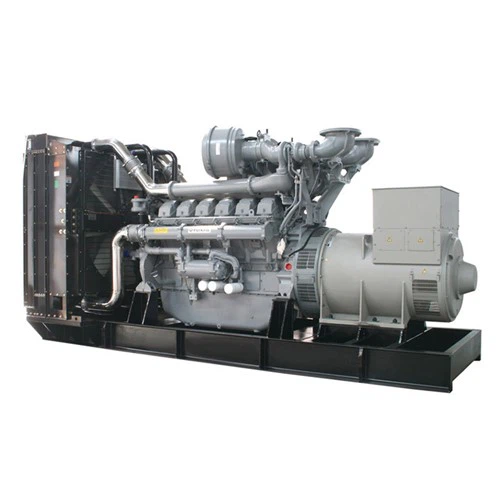
If you’re looking for a high voltage diesel generator that’s not just powerful, but built to meet all applicable regulations, and need help navigating the compliance process from start to finish, we’re here to partner with you. Reach out to our team to discuss your project requirements, and we’ll walk you through the regulatory landscape, help you select the right unit, and set up the support you need to stay compliant for years to come.
High Voltage Diesel Generator Set References
- Occupational Safety and Health Administration. (2024). Penalties for Serious Violations. U.S. Department of Labor.
- International Electrotechnical Commission. (2020). IEC 60034: Rotating Electrical Machines. IEC Central Office.
- European Commission. (2016). Non-Road Mobile Machinery (NRMM) Directive. Directorate-General for Internal Market, Industry, Entrepreneurship and SMEs.
- Texas Commission on Environmental Quality. (2023). Stationary Diesel Generator Emissions Requirements. State of Texas.
- U.S. Environmental Protection Agency. (2022). Clean Power Plan: Stationary Source Emissions Standards. EPA Office of Air and Radiation.
- Occupational Safety and Health Administration. (2021). 29 CFR 1910 Subpart S: Electrical. U.S. Department of Labor.
- International Electrotechnical Commission. (2019). IEC 60364-7-710: Electrical Installations of Buildings – Part 7-710: Requirements for Special Installations or Locations – Standby Power Systems. IEC Central Office.
Dianbida Power Equipment (Jiangsu) Co., Ltd.
We’re well-known as one of the leading high voltage diesel generator set manufacturers and suppliers in China. We warmly welcome you to buy advanced high voltage diesel generator set at competitive price from our factory. If you have any enquiry about pricelist and quotation, please feel free to email us.
Address: No. 23, Nanhuan Road, Jiangdu District, Yangzhou City, Jiangsu Province
E-mail: 19962469616@163.com
WebSite: https://www.js-dbdpower.com/
