If you’ve ever stood in front of a sweltering data center rack, or reached for the air conditioning vent in a stuffy server room, you’ve likely encountered the quiet workhorse that keeps that space from overheating: the AC axial fan. As a supplier of AC axial fans, I get this question all the time from engineers, facility managers, and small business owners sizing cooling systems: “What is the maximum airflow of an AC axial fan?” It’s not a one-size-fits-all answer, and for good reason—max airflow isn’t just a number; it’s a product of design, use case, and the fine line between pushing as much air as possible and doing so efficiently (or even safely). Today, I’m breaking down what determines an AC axial fan’s maximum airflow, how to calculate it, and what that means for you when picking the right fan for your space. AC Axial Fan
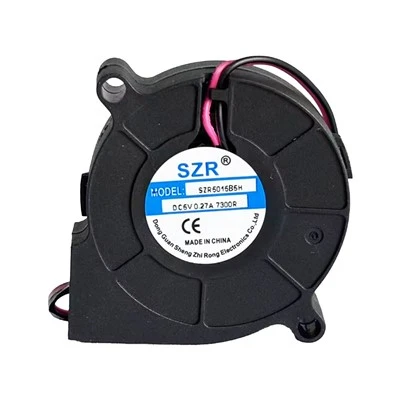
First, let’s start with the basics to make sure we’re on the same page. An AC axial fan works by moving air parallel to the axis of the fan blades—think of the large box fans you use to cool a garage, or the smaller fans inside laptop coolers, except these are engineered for commercial and industrial use. Airflow is measured in cubic feet per minute (CFM) in North America, or cubic meters per hour (m³/h) internationally, and maximum airflow is the peak volume of air the fan can move when there’s no resistance at all—this is called the “free-air rating.” It’s the number you see on a fan’s spec sheet, right next to noise level and power draw. But here’s the catch: that free-air maximum is almost never the airflow you’ll actually get in the real world. Every application adds static pressure resistance, whether that’s a vent grille, ductwork, a filter, or even the obstacle of another fan mounted next to it. So while the free-air max is a great baseline, the usable airflow for your project is always lower.
Now, what determines that free-air maximum in the first place? As a supplier, I’ve tested hundreds of models, and there are three core design factors that drive a fan’s peak airflow: blade size, blade pitch, and motor power. Let’s break each down. Blade size is the most obvious—bigger blades move more air, period. A 12-inch axial fan will push more air than an 8-inch fan from the same line, all else equal. But it’s not just diameter; blade pitch matters too. Pitch is the angle of the blades, like the blades of a propeller on a plane. Steeper pitch means each blade catches more air with every rotation, so a fan with a higher pitch will have a higher free-air max than a fan with smaller blades or flatter blades, assuming the same motor. The third big factor is the motor that drives the blades. AC axial fans run on alternating current, which means the motor’s wattage directly ties to how fast it can spin the blades. A high-quality, energy-efficient motor can spin larger blades or higher-pitch blades faster without overheating, which translates to more airflow.
Wait a second—does that mean if you crank up the power, you can get more airflow? Not exactly. Motors have a maximum safe RPM (rotations per minute), and exceeding that leads to overheating, shortened lifespan, or even failure. For example, a standard 120mm AC axial fan for general use has a free-air max of around 200 CFM, while a heavy-duty 120mm fan built for industrial use might hit 250 CFM, because it has a stronger motor and optimized blade pitch to handle higher RPM without burning out. I always tell customers that maximum airflow is a balance between those three factors, not just the biggest parts or the most power.
Now, let’s get into the practical part: how to calculate the maximum airflow for your specific application, not just the free-air number. This is where I see people make the biggest mistakes when picking a fan. Let’s say you have a 1,000 CFM cooling load for a server closet. If you just buy two fans that each have a 500 CFM free-air rating, you might be disappointed when only 800 CFM makes it into the closet. Why? Static pressure. When air has to move through a filter, a vent, or a short duct, it creates resistance, and axial fans lose airflow as pressure goes up. The fan’s performance curve—another spec I always recommend looking for—plots airflow against static pressure, and it’s a downward slope: as pressure increases, airflow decreases.
For example, let’s take a common 172mm AC axial fan, a popular size for industrial cooling. Its free-air max is 530 CFM. Now, if that fan has to push air through a standard MERV 8 filter (which is required for most commercial spaces), that adds 0.1 inches of static pressure. At that pressure, the fan’s airflow drops to 480 CFM. Add a vent grille, and another 0.05 inches, and now you’re at 450 CFM. If you put that same fan in a small 1-foot duct, you’re looking at even more pressure, and airflow could drop to 400 CFM. That’s why the free-air max is a starting point, not a final number.
So what is the actual maximum airflow you can count on for your project? As a supplier, I follow a simple rule of thumb: subtract 10-20% from the free-air max for simple, low-resistance setups (like fan blowing directly into an open space with a small vent), and subtract 25-35% for setups with filters, ducting, or multiple fans in a row. For example, if you need 500 CFM of usable airflow, you’d want a fan with a free-air max of at least 625 CFM (for low resistance) or 715 CFM (for high resistance). That buffer prevents you from undercooling your space because you didn’t account for real-world resistance.
Now, let’s address a common misconception: higher maximum airflow doesn’t always mean a better fan. I’ve had customers come to me asking for the fan with the highest CFM, only to realize they don’t need that much airflow, and the extra power means higher energy bills and more noise. For example, a 200 CFM fan might use 15 watts and run at 30 decibels (similar to a library), while a 300 CFM fan from the same line uses 25 watts and runs at 38 decibels (similar to a refrigerator). If you only need 200 CFM, the higher CFM fan is overkill, costing you more to run and adding unnecessary noise. The sweet spot is matching the fan’s maximum airflow to your cooling load, not chasing the highest number on the spec sheet.
Another factor that affects maximum airflow is the environment the fan is used in. If a fan is operating in a hot, dusty space, or at high altitude, its maximum airflow will drop. Dust can build up on the blades over time, making them less aerodynamic, so a fan that was rated for 500 CFM new might be moving 10-15% less air after a year of use in a dusty warehouse. High altitude also reduces air density, so at 8,000 feet above sea level, a fan’s airflow is about 15% lower than its sea-level rating. That’s an important point for facilities at elevation, or for applications like industrial ovens that operate at high temperatures—you might need a fan with a higher maximum airflow than you’d need at sea level to compensate for environmental losses.
Now, how do you find the right AC axial fan for your needs, with the right maximum airflow? Let’s walk through a real example that I help customers with every week. Say you’re cooling a small server closet that’s 6 feet x 8 feet x 8 feet, with a total heat load of 4500 BTU (which translates to about 220 CFM of required airflow, since 1 BTU per hour equals about 0.0004 CFM). The space has a standard air filter and a small vent, so we’ll use the 25% resistance buffer. That means the free-air max you need is 220 CFM plus 25% = 275 CFM. A common 120mm AC axial fan with a free-air max of 280 CFM would work perfectly here—its usable airflow would be around 210 CFM, which is just enough to keep the server closet from overheating, with low noise and low power use. If you picked a fan with a 350 CFM free-air max, you’d have extra airflow, but it would cost more upfront and run louder than necessary.
If you’re working on a larger project, say a data center with a 10,000 BTU heat load (about 500 CFM required airflow), you might need two 172mm axial fans, each with a free-air max of 530 CFM. Even though two fans pushing 1060 CFM free-air sounds like a lot, when you account for resistance from filters, ducting, and multiple fans, each fan would deliver about 400 CFM, for a total of 800 CFM—more than enough for that load. It’s also more energy-efficient than using one oversized fan, since you can run two smaller fans at partial speed if the heat load is lower.
Now, let’s wrap this up with what you should remember when shopping for an AC axial fan. Maximum airflow is a free-air rating, the peak a fan can move with no resistance, but that number will drop in real-world use. The three key design factors that drive maximum airflow are blade size, pitch, and motor quality, and you should always use a resistance buffer when sizing your fan to avoid undercooling. Most importantly, don’t chase the highest CFM number—match the fan’s maximum airflow to your specific cooling load and environment, and prioritize efficiency and noise level if those matter for your space.
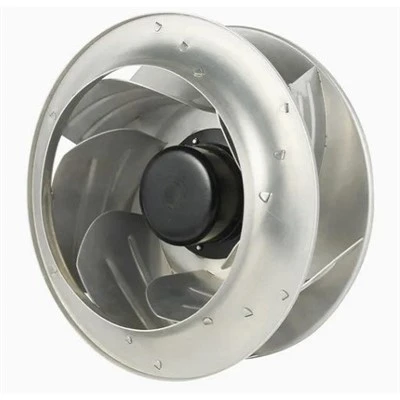
If you’re not sure which AC axial fan’s maximum airflow is right for your project, or you want to compare our line of fans to find the perfect fit, feel free to reach out to our team for a no-obligation consultation. We can walk you through spec sheets, performance curves, and help you pick a fan that delivers exactly the airflow you need, without overspending or overcooling your space.
DC Axial Fan References:
- ASHRAE. 2021. Fundamentals Handbook: HVAC Systems and Equipment. American Society of Heating, Refrigerating and Air-Conditioning Engineers.
- Manzo, N. 2018. Axial Fan Performance Parameters and Selection Guidelines. Industrial Ventilation Magazine, Vol. 42, No. 3.
- Geng, P., et al. 2020. Aerodynamic Optimization of AC Axial Fans for Residential and Commercial Cooling Applications. Journal of Mechanical Engineering, Vol. 66, No. 10.
- Amazon Energy Efficiency Project. 2022. Commercial Fan Sizing and Performance Best Practices. U.S. Department of Energy.
Dongguan Shengzhirong Electronics Co., Ltd.
As one of the most professional ac axial fan manufacturers and suppliers in China, our products have good reputation in the market. Please rest assured to wholesale high quality ac axial fan made in China here from our factory. Customized orders are welcome.
Address: 6/F, Building 2, No.68, Shunxing 2nd Road, Dajingtou 2nd Industrial Zone, Dalang Town, Dongguan City, Guangdong, China
E-mail: szr_coolingfan@163.com
WebSite: https://www.szrfan.com/
