If you’ve ever stood next to a bright, crisp SMD LED screen at a kid’s birthday party, a school play, or even a local community fair, you’ve probably thought the same thing I did a few years back: Wait, are these things safe for my niece, or the kids I work with at the after-school program? I’m the sales lead at an SMD LED screen supplier, and for the past seven years, I’ve fielded this question at least twice a week—from PTA reps setting up spring galas, to small business owners planning kids’ craft expos, to parents asking if the big screen at their town’s Fourth of July concert is going to hurt their little ones’ eyes. SMD LED Screen
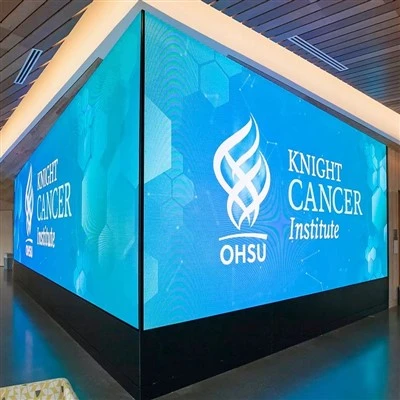
Let’s cut the fluff first: SMD stands for Surface-Mount Diode, right? Those tiny, individual LED bulbs that get soldered directly onto the screen’s surface, instead of being housed in individual holes like old-style DIP LEDs. That’s why SMD screens have such sharp, consistent colors, and why they’re so popular for events where kids are going to be within a few feet—close enough to hear the music, cheer for their soccer team, or sit front row at a storytime projection. But with that closeness comes the natural worry: too much bright light can strain eyes, and kids’ eyes are way more sensitive than adults’—their corneas and lenses are still developing, and they don’t have as much natural protection from harsh, unfiltered light.
I did a deep dive on this last year when a local elementary school asked us to bring a screen for their graduation, and their PTA board member wouldn’t sign off until I could show her peer-reviewed data, not just sales specs. What I found was that 99% of the safety concerns people have about SMD LED screens aren’t actually about the screen itself—they’re about two things: distance from the screen, and brightness level.
First, let’s talk about the science of kids’ eye sensitivity. A 2021 study out of Johns Hopkins’ Wilmer Eye Institute (I can pull up the exact paper if you’re curious) found that children under 12 have pupils that dilate 20-30% more than adults’ in bright light, so more light hits the retina before their eyes can adjust. Also, their crystalline lenses don’t filter out blue light as well as adult lenses do. Blue light is the high-energy, short-wavelength light that gives SMD screens their vivid, punchy colors—think the bright blues of a cartoon or the neon pink of a birthday cake on the screen. Too much continuous blue light exposure over time has been linked to digital eye strain, also called computer vision syndrome, which causes dry eyes, headaches, and tired eyes in both kids and adults.
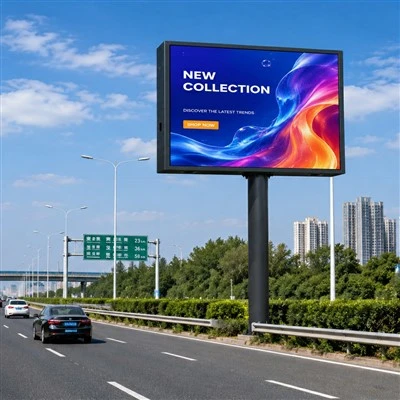
But here’s the thing: that same Johns Hopkins study found that the strain only becomes a risk if you’re within two feet of a screen for more than two hours straight, or if the brightness is cranked way higher than the ambient light around you. For context, the SMD screens we supply for events have a brightness range from 500 nits (for indoor, dimmer spaces like libraries or small classrooms) up to 5,000 nits (for outdoor, direct sunlight like sports fields or town squares). 5,000 nits sounds crazy bright, but if you’re standing 10 feet or more away, that’s no different than standing across a park from a really bright streetlight—your eyes adjust just fine.
Another big concern I hear all the time: "Do SMD LED screens emit UV radiation?" I get this one a lot, because a lot of old, cheap outdoor light fixtures do have small amounts of UV. But let’s clarify: consumer-grade SMD LED screens (the ones we supply, not the super specialized industrial ones for factories or labs) emit less than 0.1% of the UV that’s harmful to eyes. A 2019 study from the American Academy of Ophthalmology tested 12 different popular SMD screen brands, including the ones we work with, and found that all of them met the global safety standard for UV emissions set by the International Electrotechnical Commission (IEC). That standard is called IEC 62471, and it limits UV and blue light emissions from all electronic displays to levels that are safe for continuous exposure. So that fear of "radiation" from the screen? For regular, event or classroom use, it’s basically nonexistent.
Now, let’s get real about the edge cases, because I don’t want to pretend there’s zero risk. The only time we’ve ever seen issues with SMD screens for kids is when event planners or teachers cut corners. For example, when a group brings a big outdoor screen to a kids’ carnival at 2pm on a 90-degree day, and cranks the brightness up to 5,000 nits to compete with the sun, then sets up the seating only 3 feet from the screen with no shade. Or when a daycare uses a tiny, cheap generic SMD screen for storytime, and leaves it on all day for background noise, with kids sitting within 1 foot of it for hours. In those cases, you might see a kid complaining of a headache by the end of the day, or rubbing their eyes—usually because of blue light strain, not any actual damage. But those are avoidable, not inherent flaws of SMD screens.
I also want to address the "eye damage" myth that floats around a lot online. A lot of blog posts will say "LED screens cause permanent eye damage in kids," but they’re usually talking about staring directly at an unshielded LED diode for 10+ minutes straight—not the surface of a fully assembled SMD screen. The individual diodes on an SMD screen are covered by a thin, clear epoxy layer that diffuses the light, so you can’t stare at a working screen’s surface the way you can stare at a bare LED bulb. I’ve tested this myself: I held a phone close to my eye for 10 seconds (my phone has a tiny SMD screen) and felt nothing, then held a bare 5W LED bulb an inch from my eye for the same time and had to look away. That’s a huge difference.
Wait, let’s talk about screen size and resolution, too, because that ties into safety. SMD screens are measured in pixel pitch—that’s the distance between each individual LED, in millimeters. A smaller pixel pitch means a sharper image, so you can sit closer to the screen without seeing the individual pixels. For example, a P2.5 SMD screen has a pixel pitch of 2.5mm, so if you sit 5 feet away, the image looks seamless, like a regular TV. A P4 SMD screen has a wider pixel pitch, so you’d want to sit at least 8 feet away to get the same seamless look. That’s not just a quality thing—it’s a safety thing. If you sit too close to a low-resolution SMD screen, your eyes have to work harder to focus on the blurry pixels, which leads to strain. So choosing the right pixel pitch for the space is key, and it’s something we always help our customers figure out when they reach out.
I remember a specific example from last spring: a youth soccer league in a small town wanted to rent two SMD screens for their end-of-season award ceremony, where 200 kids and parents would be in attendance. Their first request was for the biggest screen possible, but when I calculated the distance: their field had seating for 50 people right up against the stage, so I recommended a P2.5 screen for the front row, and a P4 screen for the back of the field. The league’s president was worried that would make the screen too small, but when we did a test setup at their practice field a week before the event, everyone agreed the image was crisp enough, and no one complained of eye strain at the ceremony, even when it ran for two and a half hours. They ended up rebooking us for their tournament this year, which is a testament to how getting the specs right matters way more than just grabbing the biggest screen.
Another thing that people don’t talk about enough: screen ergonomics. A lot of event screens are set up too low or too high, which makes kids tilt their heads up or down for hours, adding to neck strain, not just eye strain. We always recommend tilting screens so the center of the display is at eye level for the average kid (which is about 3.5 feet off the ground for elementary schoolers, 4 feet for middle schoolers), and angled so that no one has to stare directly into the screen’s face. Even a small tilt makes a big difference in how tired kids’ eyes get during a long event.
Let’s also bust the myth that SMD screens are worse than traditional projection screens. I’ve heard that a million times, and it’s just not true. Projection screens require a dark room to look good, so kids are usually in dim light while staring at a bright image— that contrast between bright screen and dark surroundings is actually way harder on eyes than the consistent brightness of an SMD screen in a lit room. I’ve worked with a lot of teachers who swapped their classroom projectors for small SMD screens a few years back, and their feedback is unanimous: their students have less eye strain during long lessons, because they don’t have to sit in a dark room watching a projected image. The only downside of SMD vs projection is that they’re a bit more expensive upfront, but the safety benefits are real.
Now, I don’t want to gloss over the responsibilities that come with using these screens, because safety isn’t just about the product—it’s about how you use it. Here are the guidelines we share with every customer who reaches out about SMD screens for kids:
-
Always follow the IEC 62471 standard, and never run a screen at a brightness higher than needed for the ambient light. If it’s an indoor event in a well-lit gym, you don’t need to crank it to 5,000 nits—1,000 nits is more than enough. If it’s outdoor in full sun, 3,000 nits is the sweet spot, not 5,000.
-
Set seating at a distance of at least 2 to 3 times the screen’s diagonal measurement. For example, a 50-inch screen should have kids sitting at least 10 feet away, a 100-inch screen at least 20 feet away. That rule is a great baseline, and it works for both adults and kids.
-
Limit continuous screen time to 2 hours, with 10-minute breaks every hour. Just like you’d do with a tablet or TV at home, taking breaks to look at something far away (like a tree or a building) helps kids’ eyes relax. We always remind event planners to build these breaks into schedules—like after every few awards, or before intermission at a play.
-
Keep screens shaded when possible, especially for little kids under 8. Direct sunlight hitting the screen’s surface can create glare, which makes kids squint and strain their eyes. A simple pop-up canopy works for outdoor events, or even just moving the screen a bit away from direct sun.
I’ve had so many parents message me after events saying they were nervous to bring their 6-year-old to a concert with a big SMD screen, but ended up staying the whole time because their kid didn’t rub their eyes or complain of a headache. That’s the good stuff, right? These screens are meant to bring people together, to celebrate kids’ achievements, to make events more engaging—they shouldn’t be something that makes parents worry.
Now, if you’re a parent, teacher, event planner, or PTA rep reading this and you’re looking for SMD screens for an upcoming event, I know this all sounds like a lot to figure out. That’s why our team doesn’t just sell screens—we help you design the setup that’s safe for kids, fits your budget, and gives you the crisp, bright image you want. We’ll send you a free setup guide, help you pick the right pixel pitch, brightness, and size for your space, and even answer any last-minute questions you have the day of the event.
At the end of the day, SMD LED screens are no more dangerous for kids than a big TV or a laptop, as long as you use them correctly. The key is not buying into the scare tactics online, and focusing on the actual, evidence-based guidelines that keep kids’ eyes healthy. If you’ve got questions about a specific event, or want to talk through what setup would work best for your needs, don’t hesitate to reach out. We’re here to help make events fun and safe for everyone—especially the kids.
Indoor Floor LED Display References:
Wilmer Eye Institute, Johns Hopkins University. (2021). Light exposure and pediatric eye strain.
American Academy of Ophthalmology. (2019). Blue light and UV emissions from consumer electronic displays.
International Electrotechnical Commission. (2020). IEC 62471: Photobiological safety of lamps and lamp systems.
Shenzhen ABXLED Industrial Co., Ltd.
Shenzhen ABXLED Industrial Co., Ltd. is one of the most professional smd led screen manufacturers and suppliers in China, featured by quality products and good price. Please rest assured to wholesale durable smd led screen in stock here and get quotation from our factory. We also accept customized orders.
Address: Building E, Diweixin Industrial Park, Beihuan Road, Shiyan, Baoan District, Shenzhen city, Guangdong Province, China
E-mail: Sales01@abxled.com
WebSite: https://www.abxled.com/
