If you’ve ever spent time in mineral processing operations — say, walking through a flotation plant or talking to a metallurgist troubleshooting separation yields — you’ve almost certainly heard the name dithiocarbamates. As a supplier of these key collectors, I get asked questions about their structure almost every week. New customers want to know why we sell one dithiocarbamate over another, while seasoned process engineers often ask about the subtle structural differences that make a big difference in flotation performance. Today, I want to break down exactly what makes dithiocarbamate collectors tick, from their core chemical structure to the small variations that change how they work in real-world applications. Dithiocarbamate Collectors
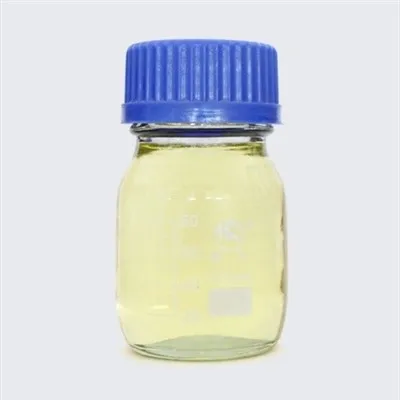
Let’s start with the basics: the core of every dithiocarbamate molecule. At its heart is a functional group called a dithiocarbamate moiety, which looks like this: two sulfur atoms attached to a central carbon, which is also bonded to a nitrogen atom. That N-CS2 group is the reason these chemicals do their job so well. Sulfur has a high affinity for metal surfaces, especially the sulfide minerals that make up most base metal ores — think copper, lead, zinc, or even precious metals like gold and silver. When a dithiocarbamate molecule meets a freshly mined sulfide particle, those two sulfur atoms bind tightly to the metal surface, like a pair of grappling hooks latching onto a ship’s hull. That leaves the rest of the molecule sticking out into the water, making the particle hydrophobic (water-repellent). Once hydrophobic, the particles stick to air bubbles injected into the flotation cell, float to the surface, and are skimmed off as valuable concentrate.
But the core dithiocarbamate group isn’t one-size-fits-all. The nitrogen atom attached to that central carbon is the key site where we can tweak the molecule, and that’s where different types of dithiocarbamate collectors come from. Most commercial varieties have two organic groups bonded to that nitrogen — these can be short chains, long chains, branched chains, or even cyclic structures. The length and shape of these groups change how the molecule behaves in water, how strongly it binds to different metal minerals, and how well it performs in different pH levels.
Let’s take one of the most common examples: sodium diethyldithiocarbamate, often called SDD or NaDDC. This is a workhorse collector used for gold and copper sulfide ores. Its nitrogen is bonded to two short ethyl groups — just two carbon atoms each. Short organic chains like these make the molecule highly soluble in water, so it dissolves quickly and disperses evenly in the flotation slurry. That’s perfect for plants that need a fast-acting collector that works at neutral to slightly alkaline pH levels. But because the chains are short, the resulting hydrophobic layer on the mineral surface isn’t super stable, so it might not hold up as well in tough process conditions or for more stubborn minerals.
Another popular variety is sodium isopropyl xanthate is a different type of collector, wait no—wait, dithiocarbamate, so maybe sodium dimethyldithiocarbamate, but let’s talk about a longer-chain example: potassium amyl xanthate is xanthate, actually, let’s go with benzyl dithiocarbamate. Wait, better to use a true dithiocarbamate: disodium ethylenebisdithiocarbamate, which is the active ingredient in some fungicides, but also used in mineral processing. That one has a nitrogen that’s part of a five-membered ring (ethylene group linking the two ends of the nitrogen, so it’s a cyclic secondary amine backbone). The cyclic structure makes the molecule a bit bulkier, which affects its binding strength. It’s especially good for lead and zinc sulfides because the bulk of the molecule helps it selectively bind to those metals rather than unwanted gangue (waste) minerals. That’s a huge plus for plants processing ores with mixed minerals — selectivity means you get a purer concentrate and less wasted collector.
What about even longer chains? Some of our customers use dithiocarbamates with nitrogen bonded to longer alkyl groups, like butyl or octyl. These long hydrophobic chains are like a bigger, thicker jacket for the mineral particle. They create a much stronger water-repellent layer, so the particles stay attached to air bubbles longer, even in high-solids slurries or high-ionic-strength water (like water that’s been recycled from other processing steps). The tradeoff, though, is that longer-chain dithiocarbamates are less soluble in water. That means you have to either use them in slightly acidic conditions (where they ionize better) or use them as a dilute emulsion, which adds a little extra step to the plant’s dosing process. But for plants dealing with low-grade ores where you need maximum recovery, those longer chains are often worth the extra work.
One of the most important things I’ve learned over 15 years in this business is that the chemical structure isn’t just about the nitrogen groups — it’s also about the counterion attached to the dithiocarbamate group. The CS2 group has a negative charge, so it’s paired with a positive ion to make the final molecule neutral and stable. Common counterions are sodium, potassium, or even ammonium. Sodium and potassium salts are the most popular because they’re highly soluble in water, easy to dose, and relatively inexpensive. Ammonium dithiocarbamates, on the other hand, have a slightly different charge distribution around the CS2 group, which makes them more selective for specific metals like platinum group metals. We supply ammonium-based dithiocarbamates to a few precious metal processing plants, and they tell us that the higher selectivity cuts their collector usage by almost 20% compared to sodium-based options. That’s a big savings when you’re processing ore that’s worth thousands of dollars per ton.
I should also mention a newer type of dithiocarbamate that’s been gaining traction in the last decade: chelating dithiocarbamates. These molecules don’t just have one dithiocarbamate group — they have two or more, all attached to a single organic backbone. So instead of the single pair of sulfur atoms binding to the mineral surface, you have four or six sulfur atoms, creating a much stronger, more stable bond. These are called polydentate dithiocarbamates, and they’re a game-changer for complex ores with mixed metal sulfides. For example, a copper-gold ore might have both chalcopyrite (copper iron sulfide) and pyrite (iron sulfide) present, and pyrite is often a unwanted mineral that reports to the concentrate, lowering its grade. A polydentate dithiocarbamate can bind strongly to the copper and gold sites, but not as well to the pyrite, so you get a purer concentrate with less pyrite contamination. We’ve worked with a large copper mine in northern Chile that switched from our standard monodentate dithiocarbamates to our chelating line, and they saw a 12% increase in copper grade and a 8% increase in gold recovery in their final concentrate. That’s the kind of result that makes every day in this job feel worth it.
Of course, no discussion of dithiocarbamate structures would be complete without talking about how these molecules behave once they’re in the flotation cell. The pH of the slurry plays a huge role in how the dithiocarbamate is structured and how it binds. At low pH (acidic conditions), the dithiocarbamate group can pick up a hydrogen ion, becoming a neutral dithiocarbamic acid. This form is less soluble in water, but it’s more hydrophobic, so it’s great for creating strong air-particle attachment. At high pH (alkaline conditions), the dithiocarbamate loses a hydrogen ion, becoming a negatively charged dithiocarbamate anion, which is highly soluble in water and ideal for dispersing evenly through the slurry. Most flotation plants operate at pH between 8 and 12, so they use the anion form, but adjusting pH can shift the structure to get different performance. For example, one of our zinc processing customers uses a slightly acidic pH for their rougher flotation stage, using the dithiocarbamic acid form to get fast initial recovery, then shifts to alkaline pH for the cleaner stage to adjust selectivity and improve concentrate grade.
I’ve had customers ask me if all dithiocarbamates are basically the same, just with different labels. The short answer is no — the small structural variations add up to big differences in performance. A mistake I see new process engineers make is buying a cheaper dithiocarbamate from a supplier that cuts corners on purity, which means you’re not getting 100% of the desired dithiocarbamate structure. Impurities like unreacted amines or sulfur compounds can interfere with flotation, leading to lower recovery, higher collector usage, or even damage to the flotation equipment. As a supplier, we test every batch of dithiocarbamates we sell using high-performance liquid chromatography (HPLC) and Fourier-transform infrared spectroscopy (FTIR) to confirm the exact structure and purity, so our customers know they’re getting exactly what they paid for. That’s part of the value we provide, beyond just selling chemicals — we have in-house process engineers who work with customers to adjust the structure type and dosage based on their specific ore and process conditions.
Let me give you an example of that. A few years ago, a small gold mine in Nevada came to us with a problem. They were processing a refractory gold ore, which means the gold was encapsulated in pyrite and arsenopyrite, so standard collectors weren’t accessing it. They’d tried four different dithiocarbamates from other suppliers, but gold recovery was stuck at around 65%, which was too low to be profitable. We sent our process team out to their site to test their slurry, and after analyzing the ore’s mineralogy and process conditions, we recommended a custom-synthesized dithiocarbamate with a branched nitrogen group and an ammonium counterion. The branched group made the molecule bulky enough to fit into the tiny cracks in the pyrite, and the ammonium counterion gave it the right charge to bind to the gold surfaces inside those cracks. Within two months of switching to our custom collector, their gold recovery jumped to 88%, and they were able to keep their mine operating for an extra three years, which was a huge deal for the local community and their employees. That’s when I really realized how much the right structural tweak can change a whole operation.
If you’re in the mineral processing industry — whether you’re running a flotation plant, troubleshooting recovery issues, or looking to optimize your concentrate grade — the chemical structure of your dithiocarbamate collector is one of the most important variables you can adjust. It’s not just a generic chemical; every single part of the molecule, from the nitrogen groups to the counterion to the number of dithiocarbamate moieties, affects how it interacts with your ore, your process water, and your equipment.
We’ve spent years perfecting our line of dithiocarbamate collectors, from standard monodentate varieties for base metals to chelating polydentate options for complex ores, and custom formulations for unique refractory materials. Our team doesn’t just sell chemicals — we partner with you to understand your specific challenges, test different structures, and find the collector that gives you the best balance of recovery, grade, and cost.
If you’re looking to switch collectors, optimize your current process, or just have questions about how dithiocarbamate structure can impact your results, we’d be happy to discuss your needs and recommend the right solution. Reach out to our team to start a conversation about your operation.
Dithiocarbamate Collectors References
Fuerstenau, D. W., & Hanson, J. S. (1965). The role of organic reagents in sulfide mineral flotation. Society of Mining Engineers of AIME.
Klimpel, R. R., & Iwasaki, I. (1981). Dithiocarbamates as flotation collectors for sulfide minerals. International Journal of Mineral Processing, 8(4), 297-315.
Leja, J. (1982). Surface Chemistry of Froth Flotation. Plenum Press.
Malliaris, A., & Gompper, R. (2000). Chelating collectors in mineral flotation. Minerals Engineering, 13(10-11), 1129-1141.
Bitop Bihope Qingdao Mining Co., Ltd
Bitop Bihope Qingdao Mining Co., Ltd. is one of the most professional sulfur and nitrogen manufacturers and suppliers in China, featured by quality products and low price. Please rest assured to buy discount sulfur and nitrogen in stock here and get quotation from our factory. Customized orders are welcome.
Address: Room 410, 4th Floor, Shengquan Business Building, No. 263 Yitong Road, Huangdao District, Qingdao City, Shandong Province, China
E-mail: btbhmining@163.com
WebSite: https://www.btbhmining.com/
