If you’ve spent any time in the plumbing, irrigation, or industrial piping space, you’ve probably had to weigh compatibility questions when sourcing materials. One question I get asked every single day, sometimes multiple times a day, is: Are PP compression fittings compatible with HDPE pipes? As a supplier of PP compression fittings, I don’t just give a yes or no answer—this is a topic where the right answer can save you thousands in installation costs, prevent leaks mid-project, and keep your systems operating reliably for years. Let’s break this down properly, based on material science, real-world installation experience, and what we’ve learned working with contractors, irrigation specialists, and industrial installers across North America for the past 12 years. PP Compression Fittings
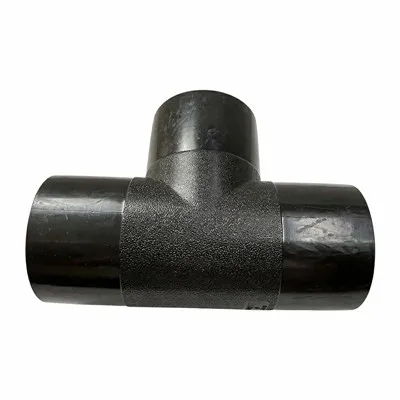
First, let’s make sure we’re all on the same page about what each of these materials is, because confusion here is where a lot of misinformation starts. PP, or Polypropylene, is a thermoplastic that’s valued for its flexibility, chemical resistance, and ability to handle temperature fluctuations from just above freezing up to around 180°F. Compression fittings made from PP are designed specifically for butt-free, solvent-weld-free installation—you just slide the fitting onto the pipe, tighten the compression nut, and the internal ring creates a watertight seal. They’re super popular for residential plumbing, landscape irrigation, and low-pressure industrial lines because they don’t require specialized tools, and they’re way less prone to damage than copper fittings in outdoor settings.
HDPE, or High-Density Polyethylene, is another thermoplastic, but it’s more rigid than PP, has a higher tensile strength, and is better for underground applications, high-pressure lines, and water distribution systems. HDPE pipes are ubiquitous for municipal water mains, agricultural irrigation, and industrial fluid transfer because they can withstand extreme underground pressure, resist corrosion, and last 50+ years when installed correctly.
Now, back to the core question: can these two work together? The short answer is yes, but with important caveats that most casual suppliers won’t tell you. The key here is that both PP and HDPE are polyolefin plastics, which means they share similar molecular structures, so they’re chemically compatible in a way that dissimilar materials—like PVC and steel, for example—never could be. But that similarity is also where a lot of mistakes happen. Just because two materials are chemically compatible doesn’t mean any fitting will work with any pipe, regardless of size or pressure rating.
Let’s start with the basics of how compression fittings work. A standard PP compression fitting has three main parts: the compression nut, the body made of PP, and a sealing ring (usually EPDM, rubber, or another compatible elastomer). When you tighten the nut, it pulls the sealing ring against the pipe’s outer wall, creating a tight seal that doesn’t require any adhesive or heat. For this to work between PP fittings and HDPE pipe, there are a few non-negotiable rules.
First, size matching is non-negotiable. PP compression fittings are sized for outer diameters (OD) of pipe, just like HDPE pipe. That means a 1-inch PP compression fitting will fit a 1-inch OD HDPE pipe—no exceptions. Where I’ve seen installers mess up is trying to force a 1-inch fitting onto a metric HDPE pipe, or vice versa. We stock both inch and metric sized fittings for exactly that reason, and we always tell customers to confirm their pipe’s OD before ordering, because even a 1/16-inch difference can cause a leak.
Second, pressure rating matters a lot. PP compression fittings have a maximum working pressure, usually around 150 PSI for our standard fittings, while HDPE pipe comes in different pressure classes—typically 100 PSI, 160 PSI, and 200 PSI, depending on the thickness. When combining the two, the system can only be rated for the lower of the two. That means if you’re using 100 PSI HDPE pipe, even our 150 PSI fittings will cap your system at 100 PSI total. That sounds obvious, but I had a client last year who tried to use his 200 PSI HDPE line with our standard fittings, and he was shocked when his pressure test only hit 120 PSI—half what he needed for his commercial irrigation system. We ended up sending him our heavy-duty PP compression fittings, which are rated for 200 PSI, and that fixed the issue immediately.
Now, where do the conflicts come in? It’s not all smooth sailing between PP fittings and HDPE pipe. The biggest issue is thermal expansion and contraction. PP and HDPE have different coefficients of thermal expansion, which means they expand and contract at different rates when temperatures change. HDPE expands about 20% more than PP per degree of temperature change. For small applications—like a residential outdoor faucet or a small irrigation line in a mild climate—this difference is negligible, so you won’t have a problem. But for long runs of pipe, like a 50-foot underground water main, or systems that see extreme temperature swings (think: outdoor lines in areas that go from -20°F in winter to 100°F in summer), this difference can cause stress on the seal over time. The HDPE pipe will expand and contract more than the PP fitting, which can loosen the nut or crack the sealing ring if the fitting is not installed properly.
So, what’s the solution for those cases? First, make sure you leave some extra space in your pipe runs to absorb that movement. Don’t run the HDPE pipe straight between two points with a PP fitting at each end—leave a small loop or a slight curve to give the pipe room to move. Second, check our installation guides: we always recommend tightening compression fittings at room temperature, not when the pipe is hot from direct sunlight or cold from being buried in frost. If you have a system that sees extreme temperatures, you can also use a transition coupling made specifically for PP to HDPE, which has a different design that accommodates the movement better than a standard compression fitting. Wait, hold on—transition couplings are a different product, right? Let me clarify: standard PP compression fittings can work, but for high-stakes applications, a transition coupling that’s specifically designed for joining PP and HDPE is a better choice, and we sell those too.
Another common mistake is thinking that all PP compression fittings are the same. Cheap fittings from no-name suppliers might be made from low-quality PP that doesn’t have the same tensile strength as our fittings, or use sealing rings that aren’t compatible with HDPE. We test every single batch of our fittings to ensure they’re compatible with both PP and HDPE, and we do pressure and temperature tests to make sure they hold up. I’ve seen a contractor buy cheap fittings from a big box store, try to connect them to HDPE pipe, and have the fitting crack during pressure testing—costing him two days of work and a lot of money in repairs. That’s the kind of mistake you can avoid by working with a supplier who actually understands the material compatibility.
Let’s talk about real-world examples to make this concrete. Last year, a municipal contractor reached out to us because he needed to repair a section of an old water main that had been installed 20 years ago with HDPE pipe. The original install had used solvent weld fittings, which were leaking, and he wanted a faster, easier repair that didn’t require digging up the entire line. He bought our 2-inch PP compression fittings, connected them to the existing HDPE pipe, and we did a pressure test that hit 180 PSI—exactly what he needed. He told us later that the repair took him 90 minutes, compared to the 8 hours it would have taken to redo the solvent welds, and it’s still holding strong 10 months later. That’s a perfect example of when PP compression fittings are the right choice for HDPE pipe.
On the flip side, a farmer in the Midwest reached out to us last spring because he was having leaks in his center pivot irrigation system. He was using our 1-inch PP compression fittings on his HDPE lateral lines, and after a few months, the seals were leaking. We went out to check, and he had installed the fittings in straight runs of pipe that stretched 100 feet between the pivot and the end of the line. The temperature swings between day and night—going from 40°F at night to 90°F during the day—caused the HDPE pipe to expand and contract so much that it pulled away from the fittings. We recommended he add a few small loops in his pipe runs to absorb the movement, and replace a couple of the standard compression fittings with our heavy-duty ones, and the leaks stopped within a week. That’s a case where the compatibility was there, but a small adjustment to installation fixed the problem.
Wait, is there any scenario where PP compression fittings should not be used with HDPE pipe? Yeah, a couple. If you’re working with systems that operate above 180°F, PP starts to soften, so even if HDPE can handle the temperature, the fitting can’t. If your system is rated for more than 200 PSI, our heavy-duty fittings are still rated for 200 PSI, so you’d need a different type of fitting entirely. And if you’re running a system with aggressive chemicals that are not compatible with PP, obviously—HDPE is more resistant to some chemicals than PP, so that’s a material choice to weigh, not a fitting choice.
Now, let’s get into what you need to do if you’re planning to combine these two materials. First, confirm your pipe’s OD. Don’t rely on nominal size alone—nominal size for HDPE is often based on inner diameter, not outer, so a 1-inch nominal HDPE pipe might have an OD of 1.06 inches, which won’t fit a standard 1-inch PP fitting. Give us a call with your pipe’s exact OD, and we can tell you exactly what size fitting you need. Second, check your system’s pressure rating. If your HDPE line is 100 PSI, our standard fittings will work, but if it’s 160 or 200 PSI, go for our heavy-duty line. Third, think about temperature and pipe run length. If you have long runs or extreme temperatures, add loops to your pipe, and consider transition couplings instead of standard compression fittings.
I can’t stress enough how important it is to work with a supplier who knows these details. A lot of companies sell PP compression fittings but don’t actually test them with HDPE, or don’t have the knowledge to walk you through these steps. We’ve been in this business for over a decade, and every day we’re out in the field with installers, testing new materials, and learning what works and what doesn’t. That’s the kind of practical experience you can’t get from a textbook.

At the end of the day, PP compression fittings are absolutely compatible with HDPE pipe—if you do it right. The key is not just the materials, but the size, pressure rating, and installation practices. If you’re planning a project, whether it’s a small residential irrigation system or a large municipal water repair, don’t guess at compatibility. Reach out to us to discuss your requirements, and we’ll help you pick the right fittings for the job, so you can avoid leaks, delays, and costly repairs down the line. We’re here to answer any questions you have, no matter how big or small, and to make sure your project goes smoothly.
Electrofusion Fittings References:
- American Water Works Association. (2018). Thermoplastic Pipe Materials and Compatibility for Water Distribution Systems. AWWA Manual M23.
- Polypropylene Industry Association. (2021). Compression Fitting Design and Compatibility for Polyethylene Piping Systems. Technical Report Series TP-007.
- National Agricultural Irrigation Association. (2020). Installation Guidelines for Polyolefin Piping in Agricultural Applications. NAIA Publication 412.
- Plastics Industry Association. (2019). Coefficient of Thermal Expansion for Common Thermoplastic Materials. Engineering Data Report ED-109.
Qingdao Polyfusion Machinery Co., Ltd.
As one of the most professional pp compression fittings manufacturers and suppliers in China, we have world-leading production equipment and strong manufacturing capabilities. Please feel free to buy bulk high quality pp compression fittings from our factory.
Address: Chengyang Industry Zone, Chengyang, Qingdao, Shandong, China
E-mail: export01@qdpolyfusion.com
WebSite: https://www.polyfusionfittings.com/
