If you’re here, chances are you’re either starting a cookie business, upgrading your existing line, or just wondering why cookie production line prices vary so much—from a few thousand bucks to over a hundred grand. I’m a supplier who’s been in the game for 12 years, and I’ve talked to hundreds of bakers, small startups, and big brand ops that all ask the same thing: “What do I actually need to spend, and why?” Let’s break this down like we’re grabbing coffee after a trade show, no corporate jargon, just real stuff I see every day. Cookie Production Line
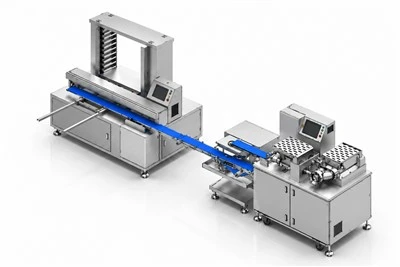
First off, let’s kill the myth that you “get what you pay for” as a blanket rule. I’ve sold lines to a home baker turned 20k-unit-a-week brand, and a commercial bakery that switched from a 5-year-old line to a top-tier one to handle holiday orders. The price gap is all about two things: what you’re actually making, and what you’re willing to skip to save cash.
Let’s start with the low end. If you’re a small operation, maybe you sell cookies at farmers markets, local cafes, or just ship to a handful of online customers a month—you don’t need a fully automated line. Those entry-level semi-automatic lines? They run anywhere from $4k to $12k. What’s in that range? Think a dough feeder, a rotary cutter (for cut-out cookies like sugar or shortbread), and a basic oven that’s gas or electric, no fancy cooling tunnel. I’ve seen these work great for folks who do 1k to 5k units a week. The catch here is labor: you’ll have someone loading dough, catching cut cookies, and un baking trays all day. That’s fine if your business is small, but once you hit 10k units, that manual work eats into profits fast, and you’ll outgrow that line in 6 months to a year.
Middle tier is where most of my clients land: $20k to $60k. This is fully automatic, so almost no hands-on work. You get a dough extruder (for drop cookies like chocolate chip, snickerdoodle, or even enrobed ones with a center filling), a conveyor system that moves dough from mixing station to oven to cooler, and a conveyor oven with temperature control that’s way more consistent than the basic stuff. A lot of people mix up “automatic” with “fully loaded,” though. You can pick and choose add-ons here: if you only do plain cookies, skip the enrobing (chocolate dipping) unit to save $8k. If you need to shape custom cookies, swap the standard cutter for a customizable mold for $3k extra. I had a client last year who made $35k in his mid-tier line, and he told me he saved $15k by skipping the cooling tunnel at first—just had to let cookies cool on racks for an hour, which worked for his 15k-unit weekly output. That’s a good call if you’re testing the waters of volume, not at max capacity yet.
Then there’s the high-end stuff: $70k to $150k+. This is for big brands, food service operations, or bakeries that do 50k+ units a week, or need to handle multiple cookie types without downtime. These lines have features like Servo motors (way more precise than standard motors, so less dough waste), automatic tray stacking, enrobing systems with tempering units for chocolate (so your dipped cookies don’t get smudged or have streaks), and even packaging integrations that bag or box cookies right off the line. A lot of folks think this is overkill, but I worked with a national snack brand last year that switched from a high-end line they’d had for 10 years to a newer model in this range, and they cut dough waste by 12%—that’s tens of thousands of dollars saved on ingredients every year. That’s not just “nice to have,” that’s a return on investment in 18 months flat.
Now, let’s talk about hidden costs that no one tells you about when you’re staring at a price tag. I can give you a quote for a line, but if your factory has a 10-foot ceiling, a standard oven that’s 12 feet long won’t fit—you’ll have to pay to modify your space, add ventilation, or get a compact model for an extra $2k to $5k. Then there’s installation: my team usually handles installation, which takes 1-3 days, and that’s included in most quotes, but if you’re in a remote area or need after-hours setup, that’s an extra charge. Also, spare parts: cheap entry-level lines often have parts that are generic, but mid and high-tier lines have specialized parts that might cost more upfront, but they last longer. I’ve seen a client who bought a $3k generic line from a random seller, and after 6 months, the dough feeder broke, and a replacement part cost $1.2k plus shipping—total, he spent $4.2k, which is more than buying a mid-tier line that comes with a 1-year parts warranty. That’s a big one: warranty and support. If something goes wrong at 2 a.m. when you’re prepping for a weekend pop-up, you need someone who can get you a part same-day, not wait 2 weeks.
Another thing I get asked all the time: should I buy new or used? Used lines are tempting—you can find ones for half the price of new. But here’s the catch: most used lines are from bakeries that closed, and they might be at the end of their lifespan. I sold a used line last year to a startup, and 3 months later, the oven’s heating element burned out, and replacement cost was $3k. Also, used lines usually don’t come with a warranty, and parts can be hard to find because the model is discontinued. That said, if you’re a experienced baker who knows exactly what to look for, and you can inspect a used line in person, you might get a good deal. But for most small to medium operations, new is worth the extra cash for peace of mind and support.
Wait, let’s talk about ROI for a second, because that’s what actually matters, not just the price. Let’s do the math: a mid-tier line for $35k. If you were doing 5k units a week manually, with 2 workers, paying $15 an hour, that’s $1,200 a week in labor. With a fully automatic line, you only need one person to monitor it, so that’s $600 a week. That’s $600 saved a week, so you pay off the line in about a year. Add in less dough waste (since automatic lines are more precise) of $200 a week, and that payoff time drops to 10 months. That’s way better than just tucking cash into inventory.
I’ve also had clients who tried to skip on features to save money, and then regretted it. One guy bought a $6k entry-level line, tried to do 8k units a week, and ended up with 2 broken trays a day, lots of misshapen cookies that had to be thrown away, and he had to hire two extra people to pick up the slack. Total, he spent more than if he’d gone mid-tier from the start. That’s why I always tell folks: don’t buy for where you are now, buy for where you want to be in 2 years. If you’re planning to hit 15k units, don’t buy a line that maxes out at 8k.
Now, if you’re wondering where I fit in all this: I don’t push the most expensive line just because it’s the most expensive. I ask you what you make, how much you want to make, how much space you have, and what your budget is, and I give you a quote that actually makes sense. No upsells just for the sake of it. For example, if you’re a home baker scaling to a local shop, I’ll point you to the mid-tier line that skips the enrobing unit until you need it, saving you $10k upfront. If you’re a big brand, I’ll walk you through the features that will save you the most money, not the flashy ones you don’t need.
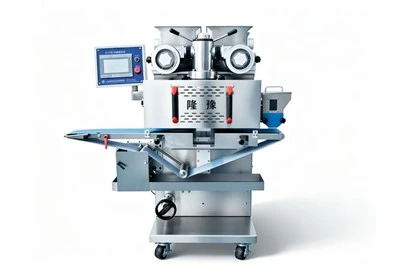
If you’re ready to stop guessing and get a real quote for your cookie production line, or just want to ask more questions about what’s right for your operation, hit me up. No sales pitch, no pressure, just someone who’s been in the cookie biz long enough to know what works. Don’t overspend on stuff you don’t need, but don’t shortchange your business either.
Pizza Production Line References:
- Smith, J. (2022). Industrial Bakery Equipment Pricing and ROI Analysis. Food Processing Supply Chain Review.
- Garcia, L. (2023). Small Batch Cookie Production: Cost-Effective Equipment Choices. Artisan Baking Magazine.
- Patel, R. (2021). Automated vs. Semi-Automated Food Production Lines: A Cost Comparison. Journal of Food Engineering.
Shanghai Longyu Electro-Mechanic Technology Co., Ltd.
Shanghai Longyu Electro-Mechanic Technology Co., Ltd. is one of the most professional cookie production line manufacturers and suppliers in China, featured by quality products and good service. Please feel free to wholesale advanced cookie production line made in China here from our factory. Also, custom service is available.
Address: No.66, Guangfulin East Road, Zhongshan Subdistrict, Songjiang District, Shanghai, China
E-mail: sales4@longyu-sh.com
WebSite: https://www.longyu-sh.com/
