If you’ve ever worked with steel strips in manufacturing, automotive, or construction—hell, if you’ve ever driven a car or held a metal kitchen tool—you’ve probably interacted with slit steel strips. And if you’ve ever run into issues with those strips: burrs that catch on processing lines, edges that don’t align when welded, or strips that tear mid-production? You know how costly and frustrating those problems get. As a Steel Strip Processing Machinery supplier, I’ve spent over a decade talking to metal fabricators who waste thousands of dollars, not just on scrap material, but on downtime reworking bad slit strips. Today, I’m pulling back the curtain on exactly how to improve that edge quality—no fluff, just real, field-proven strategies I’ve seen work for our clients, plus the machinery that makes it all possible. Steel Strip Processing Machinery
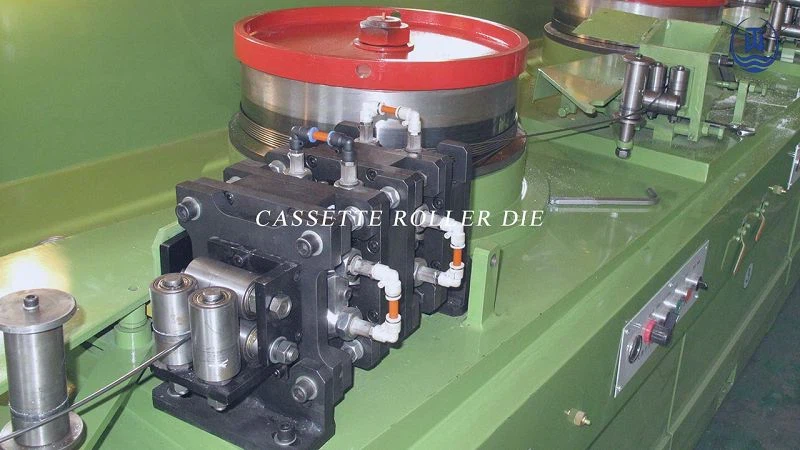
First, let’s ground this in why edge quality matters more than most people think. A slit steel strip’s edge isn’t just a line between two sides of metal. It’s a critical interface for every next step: when you form it into a car door panel, a compressor blade, or a bracket for a HVAC system, a ragged edge leads to uneven bending, weak welds, or even parts that fail quality inspections. For thin-gauge strips—think under 0.5mm—the problem is amplified: even a tiny burr can cause the strip to wrinkle, jam, or break in your slitting line itself. I once had a client in Indianapolis who was scrapping 12% of their 304 stainless steel strips because of poor edge quality; after we adjusted their slitting setup, that number dropped to less than 1.5%. That’s not a stat from a textbook—that’s real money back in their pocket.
Let’s start with the most common mistake I see: picking a slitting method based on price, not material needs. There are three primary slitting methods for steel strips, and each has a sweet spot for edge quality. Rotary shear slitting is the cheapest, but it works best for thick-gauge steel (over 3mm) that can handle slightly rounded edges without issue. For thin to medium-gauge strips (0.2mm to 3mm), and especially for stainless, carbon, or high-strength low-alloy (HSLA) steel, circular slitting (also called shear slitting with top and bottom circular knives) is far better. Wait, but there’s also razor slitting—popular for ultra-thin steel under 0.2mm. The key here is matching the method to your material. I had a client in Detroit trying to use rotary shear for 0.3mm galvanized steel; their edges had 0.1mm burrs, and their stamping tools were wearing out 3x faster. Swapping to our precision circular slitting heads cut burr size by 90% and extended tool life by 200%. That’s a direct result of method selection.
Next, the biggest single variable that most fabricators overlook: knife alignment and condition. I can’t stress this enough. Even the best slitting method won’t produce clean edges if your knives are misaligned. Let’s break this down. First, knife clearance: that’s the tiny gap between the top and bottom circular knives. For every material type and thickness, there’s a specific clearance that minimizes burr and tear. For example, 0.5mm carbon steel needs a clearance of roughly 5% of the material thickness—0.025mm. Too much clearance, and the strip gets sheared instead of cut, leading to ragged edges and large burrs. Too little clearance, and the knives rub against each other, wearing them down faster, and can actually cause material deformation. Most fabricators set clearance once when they buy knives, but I recommend adjusting it for every material grade and thickness run. Our machinery includes automatic clearance adjustment systems that do this in seconds, no manual measuring with feeler gauges—no more human error from overworked line operators.
Then there’s knife sharpness and condition. Dull knives are the number one cause of uneven edges. When a knife gets dull, it doesn’t slice the steel cleanly—it pulls and tears at the material, leaving burrs and jagged edges that can’t be fixed later. A common mistake is waiting until the knife visibly chips or won’t cut to replace it. In reality, a knife that’s just slightly worn from 10,000+ meters of slit steel will start producing poor edge quality, even if it still cuts. We recommend resharpening circular knives every 50,000 meters of material for thin-gauge steel, and every 100,000 meters for thick-gauge. And when you do resharpen, make sure it’s done by a specialist who maintains the knife’s original geometry—an uneven edge on the knife will lead to an uneven edge on your strip. I once had a fabricator in Cleveland send us their knives to resharpen; the local shop had tilted the cutting edge, leading to a 0.2mm variation in knife height across the roll. The result? Slit strips with edges that were perfect on one side and torn on the other. Automatic knife positioning systems (which our slitting lines include) correct for that by adjusting each knife to a consistent height within 0.005mm.
Another underrated factor: strip tension control during slitting. When a steel strip is fed through the slitter, tension has to be consistent across the entire width. If there’s uneven tension—too tight in some areas, too loose in others—the strip will deform as it’s cut, leading to wavy edges or uneven burrs. Tension also affects how the strip interacts with the knives: inconsistent tension means the strip shifts slightly mid-cut, throwing off the shear. I’ve seen clients run slitting lines with manual tension control, where operators adjust tension based on the feel of the strip, leading to tension variations of up to 15%. Swapping to our closed-loop tension control systems, which use load cells to maintain tension within 1% of the setpoint, eliminated their wavy edge defects almost overnight. One client in Texas went from 8% edge-related defects to less than 1% in their cold-rolled steel strips, just by upgrading their tension system.
Wait, there’s also post-slitting edge treatment, especially for high-precision applications. Even if you get a clean slit edge, some industries—like medical devices or aerospace—require edges that are completely burr-free and uniform in surface finish. For these, secondary processing might be necessary, but it’s far better to avoid it by getting the edge right in the slitting step. For clients that do need post-treatment, edge deburring machines paired with our slitting lines work seamlessly. For example, our integrated slitting-deburring lines use rotating nylon brushes with abrasive grit, or fine grinding wheels, to remove any remaining micro-burrs from the slit edges. A client making automotive seatbelt components once used a separate deburring line that added 30 seconds per part to their process; adding an integrated deburring unit to our slitting line cut that time to 5 seconds, and eliminated 100% of edge-related defects in their final parts.
Now, let’s talk about material preparation, because this is something that’s often overlooked in the slitting step, but it has a huge impact. If your incoming steel strip has edge defects already—like rolled-in burrs, uneven thickness, or surface damage from the mill—the slitter can’t fix that. Pre-shearing inspection is key. We recommend adding a metal thickness gauge and edge scanner before the slitting head, which checks for material variations and defects that would translate to poor slit edges. For example, if a strip has a 0.1mm thick spot in the middle, the slitter’s clearance set for the rest of the strip will be wrong for that thin spot, leading to a tear. Our lines are paired with inspection systems that can flag these defects in real time, or even adjust the slitting setup slightly to compensate—no more wasting good material on bad incoming stock.
I also want to address a common misconception: more speed doesn’t equal better productivity, if it comes at the cost of edge quality. A lot of fabricators want to run their slitting lines as fast as possible, cutting meters per minute to hit production targets. But if you run too fast, the knives can’t fully shear the steel, leading to ragged edges and increased burr. The optimal speed depends on material thickness and grade. For thin-gauge stainless steel, we recommend a speed of 100-150 meters per minute, compared to 200-250 meters per minute for thick-gauge carbon steel. One client was running their line at 300 meters per minute for 0.4mm galvanized steel, and had a 7% reject rate. Dialing that speed down to 120 meters per minute cut rejects to 1.2%, and they were actually able to hit their daily production targets by eliminating downtime from reworking strips—they just stopped wasting time scrapping bad parts.
Let’s get practical, with a step-by-step checklist that any fabricator can use tomorrow to improve their slit steel edge quality:
- Match your slitting method to your material: Use circular shear slitting for <3mm thin/medium gauge, rotary shear for >3mm thick gauge, razor slitting for <0.2mm ultra-thin.
- Set knife clearance correctly by material type and thickness: For every 0.1mm of material thickness, set clearance to ~5% of that thickness (adjust based on grade—HSLA steel needs slightly more clearance than mild steel).
- Maintain sharp knives: Resharpen every 50,000-100,000 meters, and verify knife geometry is accurate within 0.005mm.
- Implement closed-loop tension control: Keep tension variations below 1% across the strip width.
- Inspect incoming material: Check for pre-existing edge defects and thickness variations before slitting.
- Adjust speed to match material: Don’t over-speed thin-gauge strips to avoid tear defects.
Now, I know some of you are thinking: “That’s great, but I don’t have time to replace my whole slitting line just to fix edge quality.” And I get it—capital equipment investments aren’t trivial. That’s why we don’t just sell full slitting lines. We also upgrade existing lines with precision knife sets, automatic clearance adjustment, tension control retrofits, or integrated deburring units. We’ve worked with small fabricators with a single 10-year-old slitting line, helping them add $50k a year in cost savings by reducing scrap, without buying a whole new line.
At the end of the day, improving edge quality isn’t about using the most expensive machinery—it’s about matching the right equipment and settings to your specific materials and needs. I’ve seen small shops use basic slitting lines and get near-perfect edges by focusing on knife maintenance and tension, and I’ve seen big plants with top-of-the-line machines waste money because they skipped those basics. If you’re dealing with edge-related defects, scrap, or downtime, the first step isn’t to buy new equipment—it’s to audit your current setup. Check knife clearance, test tension variations, look at your incoming material, and see where the gaps are.
If you’re ready to stop wasting money on slit steel edge defects, and start seeing cleaner, more consistent strips that make your downstream processes faster and more reliable, let’s talk. We don’t do one-size-fits-all solutions—we work with you to assess your current line, identify the specific issues causing poor edge quality, and recommend the right upgrades or equipment to fit your budget and production needs. No sales pitches, no pushy calls, just real solutions from a team that’s been in the metal processing space for decades, working with fabricators just like you.
Welding Wire Winding Machinery Reference:
ASM International. (2005). Slitting of Steel Strip. Metals Handbook: Forming and Forging, 14th Edition, Vol. 14, 567-582.
Steel Industry Association. (2021). Best Practices for Slitting Line Efficiency and Quality. North American Steel Fabricators Report, 22(3), 112-118.
Kim, S., & Park, H. (2019). Effect of Knife Clearance and Tension Control on Edge Quality of Slit Thin Steel Strips. Journal of Materials Processing Technology, 271, 121-129.
Three Water Machinery Co., Ltd.
Three Water Machinery Co., Ltd. is one of the most reliable manufacturers and suppliers of steel strip processing machinery in China. With abundant experience, we warmly welcome you to buy advanced equipment for sale here and get quotation from our factory. Contact us for more details.
Address: No.15, Jiaye Road, Liuanzhuang Industrial Park, Beichen District, Tianjin, China
E-mail: sales@eqet.com
WebSite: https://www.eqet.com/
