If you’ve ever walked the aisles of a chemical distributor, scrolled through a supplier’s product catalog, or sat in a lab discussing formulation tweaks, you’ve probably noticed two lines of products that often end up confused: specialty oils and polymer additives. As a supplier who’s worked with both for 12 years—serving manufacturers of plastics, coatings, adhesives, and automotive parts—I can’t tell you how many times a customer has called saying, “I need a polymer additive to soften my PVC,” only to end up mixing it with a specialty oil that not only doesn’t work but derails their entire production line. The two are not interchangeable, and mixing them up isn’t just a small mistake; it’s a costly one, leading to wasted material, delayed timelines, and inconsistent final products. Let’s break down what sets them apart, why their roles matter, and how knowing the difference can save you money and headache. Polymers & Specialty Oils
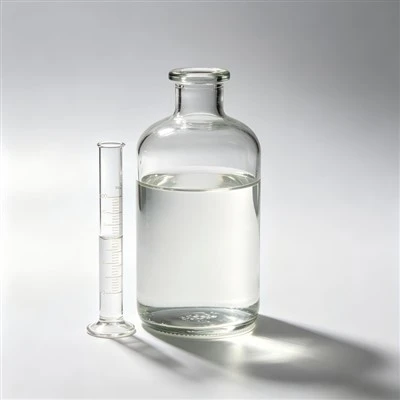
First, let’s start with core purpose, because that’s where all other differences stem from. Polymer additives are designed to modify a polymer’s inherent molecular structure to enhance performance or processing characteristics that the base polymer can’t provide on its own. They’re like targeted upgrades: you’re not adding them to fill space, you’re adding them to change how the polymer behaves. For example, if you’re making a polypropylene (PP) food container, the base PP is rigid enough for shape but not inherently UV-resistant or stain-resistant. A UV stabilizer (a common polymer additive) bonds to the polymer’s molecular chains to absorb UV radiation before it breaks down those chains, keeping the container from becoming brittle and yellow after a year of use. A slip agent like erucamide, another polymer additive, migrates to the surface of the PP film to reduce friction, so the film doesn’t stick to itself during packaging or processing.
Specialty oils, on the other hand, are often diluents or functional fluids that interact with polymers differently—they don’t usually bond chemically to the polymer’s structure. Their primary roles fall into two buckets: processing aids, which make polymer manufacturing easier, or performance modifiers, which adjust properties like flexibility, viscosity, or compatibility. A common example is mineral oil used as a plasticizer for PVC. Wait, hold on—some people call mineral oil a plasticizer, which is a type of polymer additive, but that’s a misnomer when it’s used as a specialty oil. Let’s clarify: true plasticizers (polymer additives) are chemicals like phthalates or adipates that chemically insert themselves between polymer chains to reduce intermolecular forces, making the plastic softer and more flexible. But when you use a high-viscosity mineral oil as a processing aid for PVC extrusion, it acts as a temporary lubricant during melting, not a permanent chemical modifier. If you overdo it, the oil will leach out over time, leaving your PVC brittle instead of flexible—something that never happens with a properly formulated polymer plasticizer.
That brings us to another key difference: chemical interaction. Polymer additives are engineered to be chemically compatible, meaning they bond or integrate with the polymer matrix at the molecular level. This is critical because it means their effects are long-lasting. Take antioxidants, for instance: hindered amine light stabilizers (HALS) are a class of polymer additives that react with free radicals generated by heat, light, or oxidation, neutralizing them so they can’t break down the polymer. Once incorporated during compounding, they stay in the polymer, protecting it for the product’s entire lifespan—think of a car bumper that doesn’t crack after 5 years of sun exposure. Some additives are even reactive: crosslinking agents for polyethylene (PE) chemically link polymer chains together during curing, turning a thermoplastic that melts when heated into a thermoset that’s rigid and heat-resistant—an irreversible change that’s exactly what the additive is designed to do.
Specialty oils, by contrast, are generally non-reactive with the base polymer, or only interact physically. Most are high-purity hydrocarbon or ester fluids, with molecular weights much smaller than polymer chains, so they sit between the chains without bonding. That means their effects are often temporary, or dependent on staying dispersed in the matrix. For example, a specialty oil used as a lubricant for a thermoplastic injection molding process reduces friction between the melted polymer and the mold walls, making it easier to fill complex shapes and prevent defects like flow marks. But once the part is molded and cools, some of the oil will migrate to the surface over time, leaving the part less lubricated for handling (and potentially ruining paint or adhesive later applied to it). For some applications, that migration is intentional—specialty oils are used in personal care products like lip balms where they deliver a soft, moisturizing feel, and they’re designed to be absorbed slowly, not permanently bonded. But for rigid industrial parts, that migration is a flaw, not a feature, and it’s a direct result of how they interact with polymers, versus additives that don’t move.
Next, let’s talk about regulatory and application use cases, because that’s where practical business differences hit home. Polymer additives are subject to strict regulatory testing for their end use, especially in industries like food packaging, medical devices, or children’s products. The FDA, EU REACH, and other agencies have specific thresholds for how much of a given additive can leach out of a product, because they’re chemically incorporated into the polymer. For example, a food-grade slip agent for food contact film has to meet FDA 21 CFR 177.1520, which tests for extractables into food simulants—since the additive is part of the polymer matrix, leaching is a safety concern.
Specialty oils, by contrast, have much more flexible (but still important) regulations, because their role is often not as a structural component of the polymer. A specialty oil used as a lubricant for conveyor belts in a factory isn’t part of the final product, so extractable limits are less strict for that use case. Even when they are part of the final product, like a specialty oil in a cosmetic formulation, the regulations look at skin absorption and safety, not leaching into food. That said, you still have to match the oil to the polymer’s required properties: a silicone-based specialty oil won’t mix well with a water-based acrylic coating, for example, because their molecular structures are incompatible, leading to separation, cloudy coatings, or uneven performance. This is where expertise matters—many customers call us looking for a “universal” oil or additive, but the right choice depends on the polymer type, processing method, and final product requirements.
Let’s add a couple of real-world examples to make this concrete, because theory only goes so far. Last year, a customer who makes flexible silicone hoses for automotive cooling systems reached out. They were using a petroleum-based specialty oil as a plasticizer to make the hose flexible enough to fit tight engine bays, but after 6 months of use, the hoses were cracking and the oil was oozing out of the walls. The problem? They’d used a specialty oil that was only designed for temporary processing aid, not long-term integration. When we suggested switching to a silicone-based polymer additive plasticizer specifically formulated for crosslinked silicone, which bonds to the silicone’s molecular chains, the hoses stayed flexible for over 2 years of testing, with no oil migration. That was a $15,000 mistake they avoided, all because they learned the difference.
Another example: a paint manufacturer was struggling with their exterior acrylic coatings fading after one winter. They initially tried adding a cheap mineral oil specialty oil to improve UV resistance, which made the paint glossier but didn’t stop fading. The right fix was a UV absorber polymer additive, which absorbs UV radiation and integrates with the acrylic resin, preventing the resin from breaking down. The oil added a temporary gloss boost that wore off after a few months, while the additive provided long-term color stability for the full life of the house paint.
Now, why does this matter to you as a buyer? Let’s break down the business impact. If you’re a small business making custom plastic parts, mixing up an additive and a specialty oil could mean a ruined batch of parts, lost material, and missed delivery deadlines—costs that add up fast. If you’re a large manufacturer producing thousands of automotive components, using the wrong material could lead to product recalls, warranty claims, and damage to your brand reputation. That’s why partnering with a supplier who knows both categories, not just one, is key. We don’t just sell products—we work with you to audit your formulation, your processing line, and your end product requirements to pick the right material, because we’ve seen first-hand what happens when the line between these two is crossed.
It’s also worth noting that there’s a tiny gray area, which is why the confusion happens. Some modern specialty oils have modified molecular structures that let them act as temporary compatibilizers, or some additives have properties that overlap with specialty oils. For example, bio-based ester oils are sometimes used as both a processing aid for bioplastics and a partial plasticizer, but even then, they’re not the same as a reactive polymer additive. The difference comes down to permanence and chemical interaction: additives are meant to stay and modify the polymer long-term, oils are meant to either support processing or add temporary performance that’s not tied to the polymer’s structure.
At the end of the day, the takeaway is this: specialty oils and polymer additives are two distinct tools in your formulation toolkit, each serving a specific purpose. You wouldn’t use a screwdriver to turn a bolt, and you shouldn’t use a specialty oil when you need a polymer additive (or vice versa). Whether you’re launching a new consumer product, optimizing an existing production line, or troubleshooting a recurring issue, getting this right will save you time, money, and frustration.
If you’re unsure which material is right for your application, our team has worked with everything from low-density PE films to high-temperature engineering plastics, and we can help you navigate the differences to find the perfect fit. Reach out to start a conversation about your specific needs, and let’s avoid that costly mix-up before it happens.
Inorganic Acids & Bases References:
- Gächter, R., & Müller, H. (2009). Plastics Additives Handbook (6th ed.). Hanser Publishers.
- Kroschwitz, J. I. (Ed.). (2004). Kirk-Othmer Encyclopedia of Chemical Technology (5th ed.). John Wiley & Sons.
- Modern Plastics Encyclopedia. (2022). McGraw-Hill.
- REACH Regulation (EC) No 1907/2006. European Chemicals Agency (ECHA).
- FDA Code of Federal Regulations, Title 21, Part 177.
Shanghai Dingwujin Chemical Co., Ltd.
Shanghai Dingwujin Chemical Co., Ltd. is one of the most professional polymers & specialty oils suppliers in China. We cooperate with qualified Chinese manufacturers and provide high quality customized service. With over a decade of experience in local chemical trade, we have long been deeply engaged in the markets of EU Central & Eastern Europe, the Western Balkans, Ukraine and Moldova. Welcome to buy bulk high quality polymers & specialty oils made in China here from our company.
Address: No.12, Lane 199, Yefan Road, Yexie Town, Songjiang District, Shanghai, P.R.China
E-mail: dwjchem@dwjchem.com
WebSite: https://www.7dchem.com/
